
Laptop & PC
💻 ASUS Zenbook Duo (2024) review: The first dual-screen laptop worth buying ✨

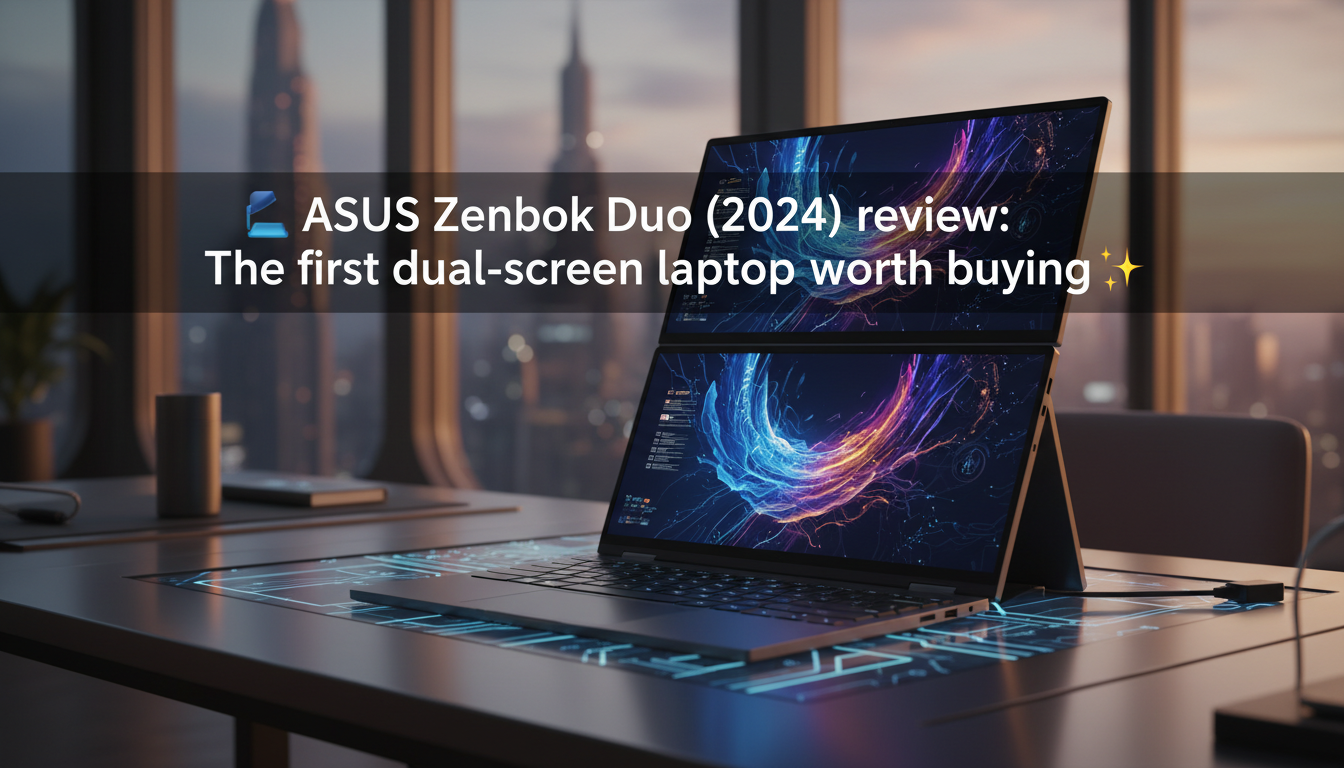
For over a decade, nearly every major PC manufacturer has experimented with the concept of a dual-screen laptop 🕰️. The journey dates back to 2011 with the Acer Iconia 6120, a device boasting two 14-inch displays. By CES 2017, Razer was showcasing Project Valerie, an ambitious triple-panel prototype, followed a year later by the slightly more restrained Project Linda 💻. In 2020, Dell captured imaginations with the Concept Duet, and even Apple briefly flirted with secondary screens via the Touch Bar before eventually abandoning the feature entirely 🍎.
While Lenovo has persisted with its Yoga Book family—culminating in the impressive Yoga Book 9i—it is ASUS that has finally refined the concept into a truly cohesive package with the Zenbook Duo 💎. This sleek machine offers dual screens within a footprint barely larger than a standard clamshell, complete with a detachable keyboard ⌨️ and an integrated kickstand for ultimate adaptability 🏗️. Perhaps most importantly, with a starting price of $1,500 💰, it avoids the exorbitant “early adopter” tax usually associated with such utility. It has been a long road, but ASUS has finally produced a device that proves, unequivocally, that two screens are better than one! ✌️🖥️
Two screens really are better than one ✌️
ASUS Zenbook Duo 💻
With a starting price of $1,500 💸 and dimensions comparable to a standard laptop, the ASUS Zenbook Duo is the first dual-screen device that feels like a practical purchase rather than a novelty 💼.
Pros ✅
Sleek design ✨
Gorgeous screens 🤩
Built-in kickstand 🏗️
Good port selection 🔌
Solid battery life 🔋
Cons ❌
Slightly pricier than a traditional clamshell 💰
Windows 11 still isn’t optimized for dual-screen laptops 🪟
$1,500 at ASUS 🛒
Design 🎨
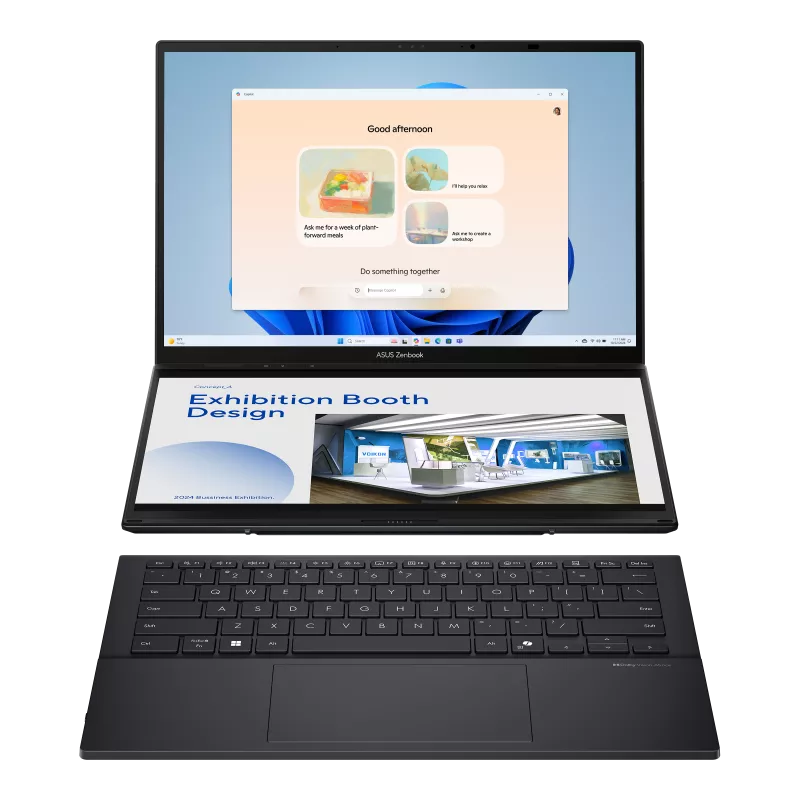
Perhaps the most remarkable aspect of the Zenbook Duo is its unassuming appearance. It avoids looking like a Frankenstein’s monster of technology; at a glance, it is simply a 14-inch laptop 💼. Even when opened, the experience feels familiar, featuring a physical keyboard, a responsive touchpad, and a healthy array of ports—including two Thunderbolt 4 inputs, a USB 3.2 Type-A, and a full-size HDMI 2.1 jack 🔌. While the omission of an SD card reader is a minor annoyance, it is understandable given the internal spatial constraints.
The device truly reveals its character once the keyboard is detached, causing the second display to spring to life ✨. The possibilities here are extensive. A three-finger tap on the lower panel summons a floating touchpad, while an eight-finger tap generates a virtual keyboard ⌨️. Swiping up reveals a traditional keyboard and trackpad layout. Because these interfaces are virtual, they offer immense flexibility—you can instantly swap language layouts, reposition the touchpad, or call up a numpad for data entry 🔢. It is a liberating experience to no longer have half of the laptop’s interior permanently occupied by rigid physical keys.
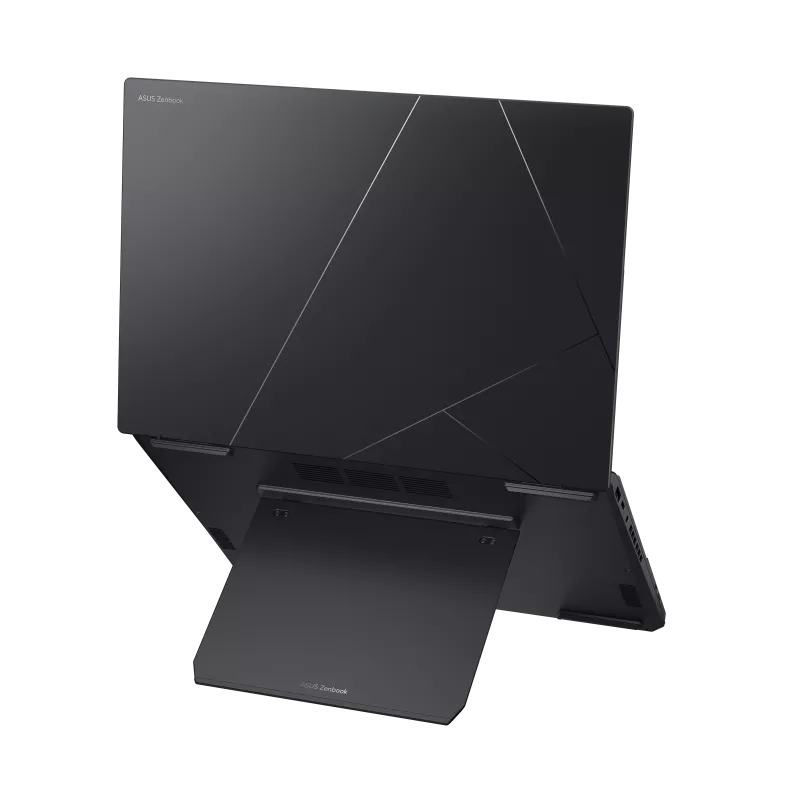
ASUS built a very handy kickstand into the bottom of the Zenbook Duo 🏗️.
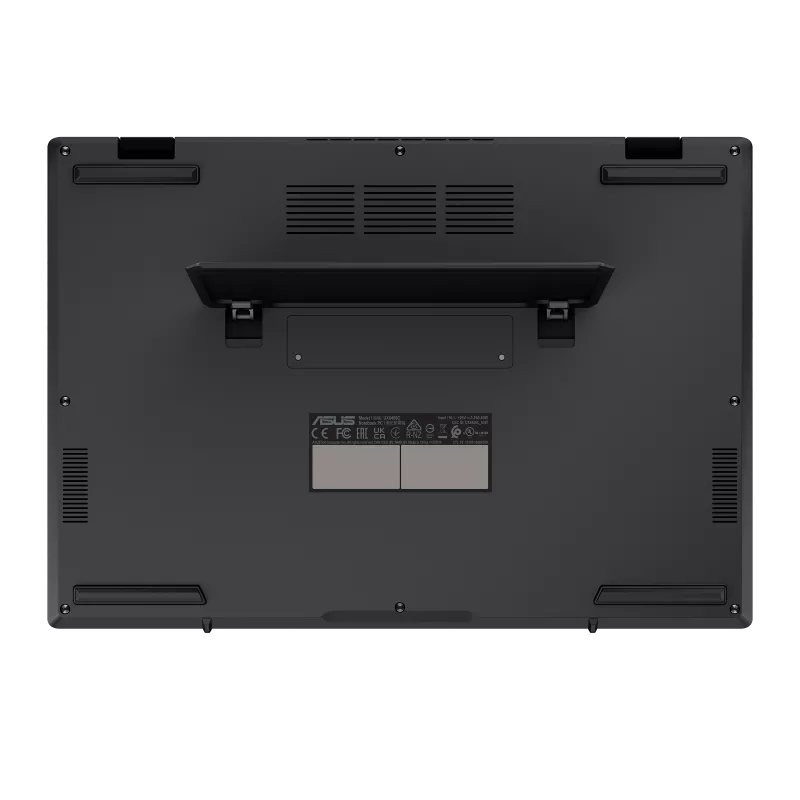
The experience is further elevated by the integrated kickstand on the bottom of the device. This simple addition allows you to prop the system up, effectively creating a portable dual-monitor workstation contained within a single chassis 🏢. Since the detachable keyboard connects via Bluetooth, it can be positioned freely, just like a desktop setup 🖱️. There is one minor drawback: the kickstand’s design offers no tilt adjustment when the displays are rotated into a side-by-side portrait orientation. However, this design choice clearly favors a stacked arrangement with one display above the other, which is arguably the more ergonomic and useful configuration for most users 🔝.
Surprisingly, doubling the screen real estate hasn’t resulted in unmanageable bulk ⚖️. The Zenbook Duo weighs 3.6 pounds and is 0.78 inches thick. For comparison, a standard Zenbook 14 OLED is 2.82 pounds and 0.59 inches thick, while a premium Dell XPS 14 comes in at 3.7 pounds and 0.71 inches. In essence, the Duo is no more burdensome to carry than many high-end clamshell laptops 🎒.
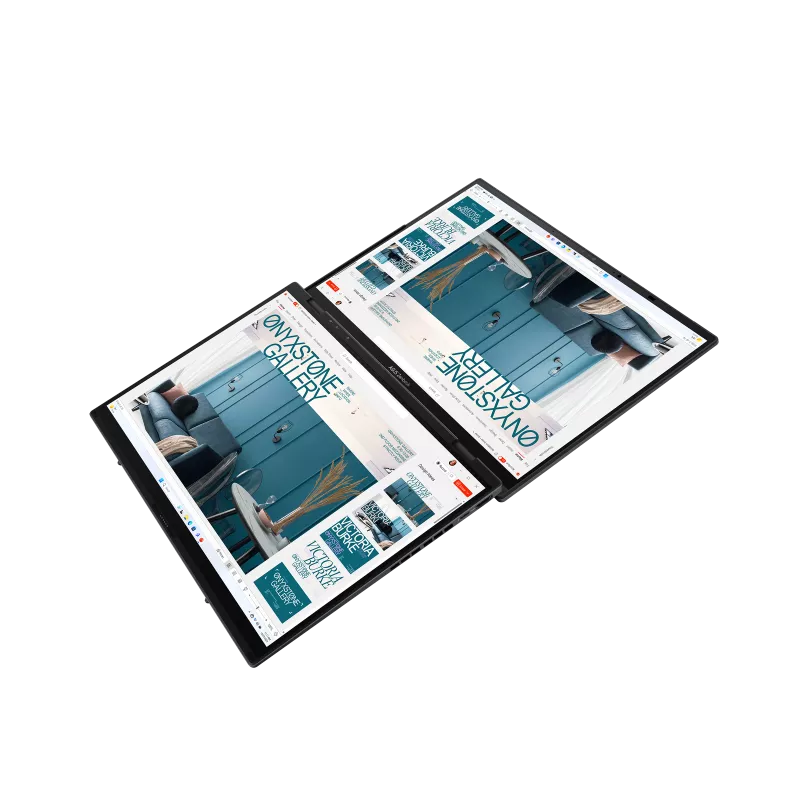
Moving apps from one screen to another is as simple as dragging and dropping or using ASUS’ handy snapping menus 📂🖱️.
If there is a critique to be made, it lies in the aesthetic. The somber dark gray finish feels like a missed opportunity for such a revolutionary device—it’s almost as if ASUS is trying to downplay the innovation 🌑. This machine, and the engineering team behind it, deserve a design that celebrates its uniqueness rather than hiding it 🎨🖌️.
Displays and software 📱
The true stars of the show are the twin 14-inch displays 🌟. These matching OLED panels are nothing short of spectacular, delivering robust brightness (peaking around 500 nits) and rich, accurate colors that cover 100 percent of the DCI-P3 gamut 🌈. The real magic, however, lies in how these two screens operate in tandem.
In tight spaces, the Zenbook Duo can function just like a traditional clamshell laptop 💻.
Navigating between the two screens is intuitive, whether dragging and dropping apps or utilizing the snapping menus that appear at the top of the display 🖱️. ASUS’ proprietary ScreenXpert software further enhances utility, offering a floating button for quick access to brightness controls, panel management, and widgets for tools like handwriting recognition or weather updates 🌤️. ASUS has done a commendable job of maximizing the value of the dual-display setup through software.
The limitation, however, lies less with ASUS and more with the operating system. Windows 11 and many third-party applications still lack full optimization for this form factor 🪟. During testing, I encountered glitches—such as the virtual touchpad becoming unresponsive while playing *Teamfight Tactics* with stats on the lower screen 🎮. Resolving the issue required switching to borderless window mode and restarting the game. While such hiccups were rare, they serve as a reminder that early adopters of cutting-edge hardware may occasionally face software friction ⚠️.
Performance 🚀
The Zenbook Duo features an excellent selection of ports for its size including two Thunderbolt 4, one USB 3.2 Type-A, 3.5mm audio, and a full-size HDMI 2.1 jack 🔌.
Under the hood, the Zenbook Duo is equipped with an Intel Core Ultra 7 155H processor, 16GB of RAM, and a 1TB NVMe SSD ⚙️. While configurations with double the memory and a faster Ultra 9 chip are available, the base model proves more than capable. In benchmarks like Geekbench 6 and PCMark 10, the Duo posted results identical to similarly equipped clamshells, confirms that the secondary screen imposes no significant performance tax 📊. Even in desktop mode, dragging applications between displays feels snappy. The only notable trade-off is the lack of a discrete GPU, meaning the Duo is optimized for general productivity rather than intensive video editing 💼.
Battery life 🔋
One might assume that powering two displays would decimate battery life, yet the Zenbook Duo defies expectations 🔋. With a single screen active, it lasted 13 hours and 12 minutes in our video rundown test. Even with both screens blazing, the device managed a respectable 10 hours and 17 minutes, which is more than sufficient to survive a full workday away from a power outlet ⏳.
Wrap-up 🎬
The most impressive thing about the Zenbook Duo is that it offers two screens without adding a ton of extra bulk or cost 🏆.
The Zenbook Duo successfully delivers on the long-held promise of dual-screen computing. But who, exactly, is this device for? While the most obvious candidates are travelers who rely on portable monitors ✈️, its appeal is much broader. This laptop is for anyone who prizes screen real estate and desires a self-contained system that can replicate a multi-monitor desktop experience anywhere 💼. Best of all, it demands few sacrifices; thanks to the detachable keyboard, it functions perfectly as a standard laptop when space is at a premium, such as on an airplane tray table 🛫.
Given space to spread out, it transforms into a versatile command center, allowing you to manage a primary project on the top screen while relegating Slack, email, or video calls to the bottom 📧. It provides ample ports to avoid dongle fatigue, and thanks to the stunning OLED panels, everything looks exceptional 🌈. The Zenbook Duo matches the capabilities of a traditional laptop and then surpasses them. While the software experience requires further polish, the hardware is a triumph. After years of prototypes and false starts, the Zenbook Duo stands as a marvelous torchbearer for a new class of portable PCs 🕯️🏆.
Continue Reading
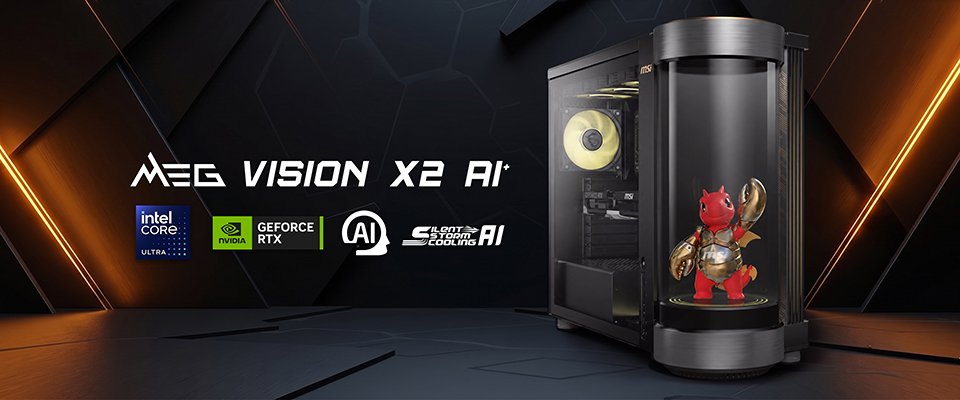
Forget dedicated AI buttons—MSI just built a holographic AI companion 🤖 directly into your next gaming PC 🎮.
MSI’s newest gaming desktop, the MEG Vision X2 AI+ 🖥️, takes the current industry trend of adding AI to everything and makes it literal. Instead of just relying on software features or a dedicated keyboard button ⌨️, MSI has built a secondary display directly into the front of the PC case to house a virtual assistant 💁♂️.
The company calls this cylindrical screen the AI Holostage ⚪. It serves as a physical home for LuckyClaw, an AI companion that runs locally on the machine. According to MSI, you can use natural voice 🗣️ or text commands 💬 to ask LuckyClaw to adjust your system’s performance profiles ⚡, change monitor settings 🖥️, or swap out your RGB lighting colors 🌈.
If you aren’t interested in using MSI’s default mascot, the software also supports custom third-party avatars 🎭. It is basically a voice-activated settings menu with a face 👤. MSI says the software will get updates over time to add more features 🔄.

#MEG Vision X2 AI+
MSI MEG Vision X2 AI+ ✨
If you look past the built-in screen, the MEG Vision X2 AI+ is simply a very high-end gaming PC 🔝. It can be configured with Intel’s Core Ultra processors 🧠 and up to an Nvidia RTX 5090 graphics card 👾. The system can reach up to 3400 TOPS of total AI performance 🚀.
To keep the hardware cool, the desktop includes a 360mm liquid cooler ❄️💧. The interior design relies on MSI’s Project Zero motherboard standard, which moves all the power connectors to the back of the board. This hides the cable clutter and keeps the inside of the case looking neat 🧹 behind the glass panel 🧊.
The rest of the specifications include modern standards like PCIe 5.0 storage 💾, DDR5 memory, Wi-Fi 7 📶, 5G Ethernet, and Thunderbolt 5 support ⚡.
MSI has not announced a release date 📅 or pricing details yet 💸.
In related news, MSI has recently launched a 425Hz 1440p gaming monitor 🖥️ that costs less than $330 💵.
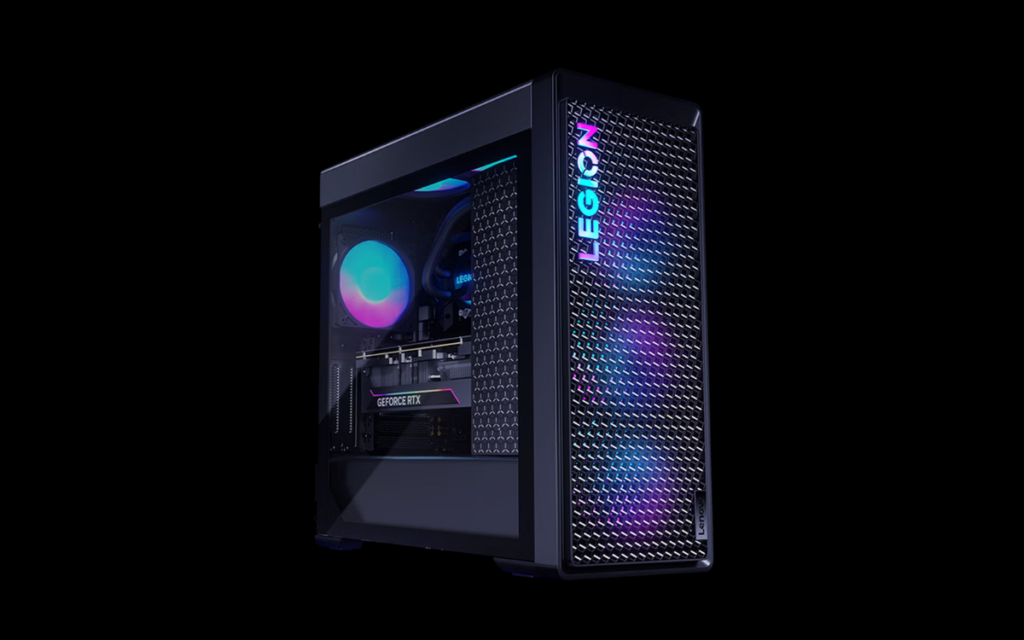
✍️ Lenovo is rewriting the pre-built playbook with its new Legion Blade 7000K, a high-performance 🧟♂️ “Frankenstein” desktop that pairs a laptop-grade i7 processor with the 🎮 RTX 5060 and a bizarre 🧠 24GB of RAM.
Lenovo has added a new configuration to its Legion Blade 7000K desktop PC lineup, combining an Intel Core i7-13650HX processor with an Nvidia RTX 5060 graphics card. ⚙️ The system is currently available with a promotional launch price of 💰 9,999 yuan ($1,478), and will eventually shift to a standard retail price of 🏷️ 10,499 yuan ($1,552).
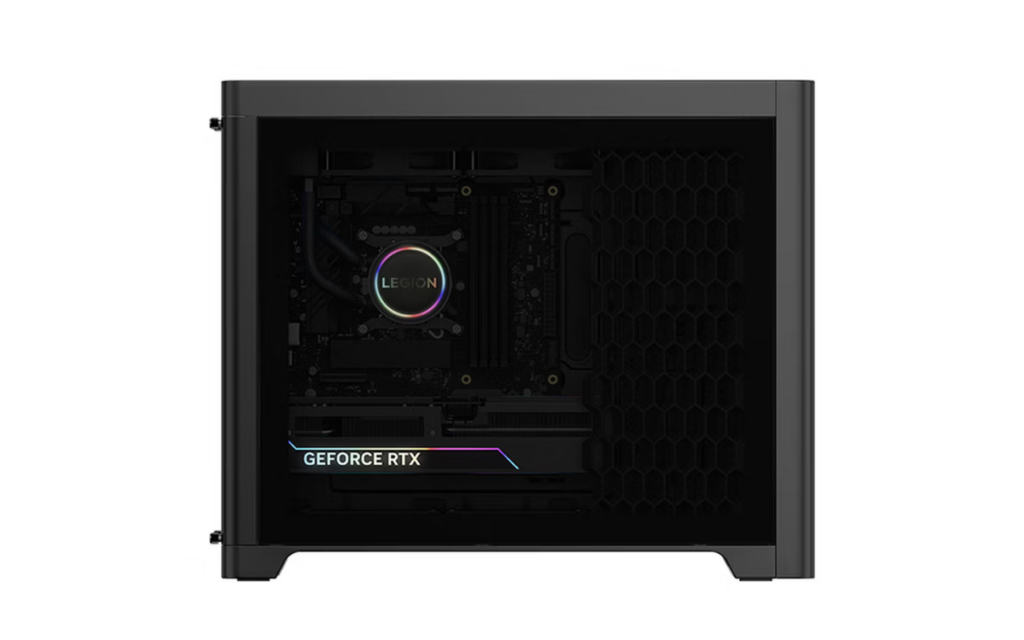
🖥️ Lenovo Legion Blade 7000K desktop
#Legion Blade 7000K
📋 Lenovo Legion Blade 7000K Specifications
🧐 The most interesting part of this build is the choice of processor. The Core i7-13650HX is actually a mobile chip designed for high-end laptops, though it is built on repurposed desktop silicon. 🔬 Lenovo has opted to use it here inside a standard desktop tower. It features a 🚀 14-core, 20-thread configuration, which is split into six performance cores and eight efficiency cores.
The chip also includes a 24MB Smart Cache and reaches a peak turbo frequency of ⚡ 4.90 GHz. It operates at a 55W base power but can draw up to 🔌 157W when pushed to its maximum turbo consumption. Lenovo paired this processor with Nvidia’s RTX 5060, a graphics card that handles standard 1080p and 1440p gaming, as well as basic video encoding and 🤖 AI tasks.
For memory, the system comes with 🐏 24GB of DDR5 RAM running at 5600MHz. That is an unusual amount for a pre-built PC, since they usually ship with either 16GB or 32GB. 🧩 It gives you a bit more room for multitasking than a standard 16GB setup without making the computer as expensive as a 32GB model. For storage, it includes a standard 🗄️ 1TB PCIe 4.0 NVMe SSD.
Lenovo Legion Blade 7000K desktop
🏗️ The case design is functional and sticks to the established look of the Legion brand. The chassis comes in a Titanium Crystal Gray finish and relies on a mesh front panel for intake ventilation. Behind this mesh, Lenovo included a textured airflow shroud, which the company refers to as its 🌑 Night Sky design, to help direct air over the internal components. 🌬️
Like most modern gaming desktops, the Blade 7000K includes customizable lighting. 🌈 The front panel features an ARGB Legion logo, and the internal cooling fans are equipped with 💡 12-LED RGB rings. It also features a standard 💎 tempered glass side panel that allows users to see the internal hardware, while the primary I/O ports are situated on the top edge of the case.
🗞️ In related news, Lenovo recently unveiled the Lecoo Air 14, Intel’s first laptop based on the Project Firefly initiative, and also introduced the 2026 ThinkPad X13 powered by the 📈 Ryzen AI 7 445 with up to 32GB of LPDDR5x memory.
Laptop & PC
CHUWI CoreBook Air Launches as a Copilot+ PC with Intel Lunar Lake, 2.8K Display and 15-Hour Battery 🚀🔋✨
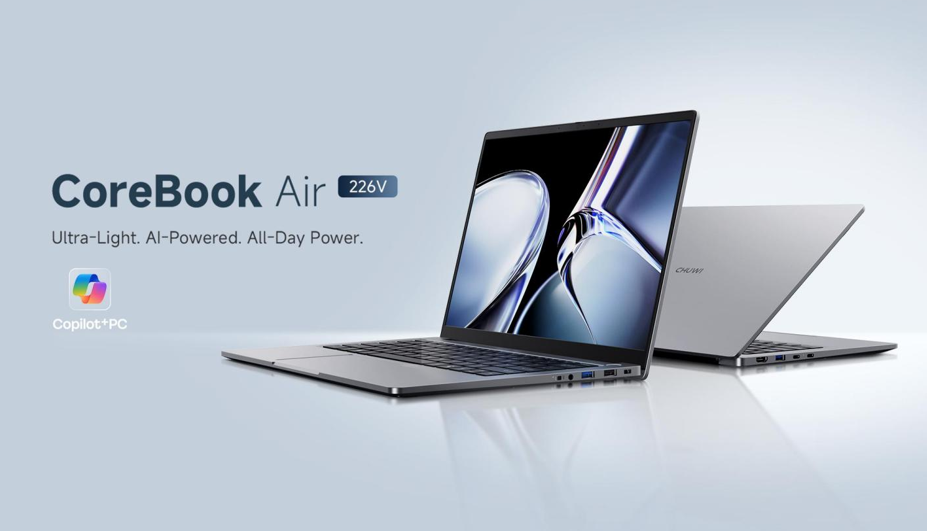
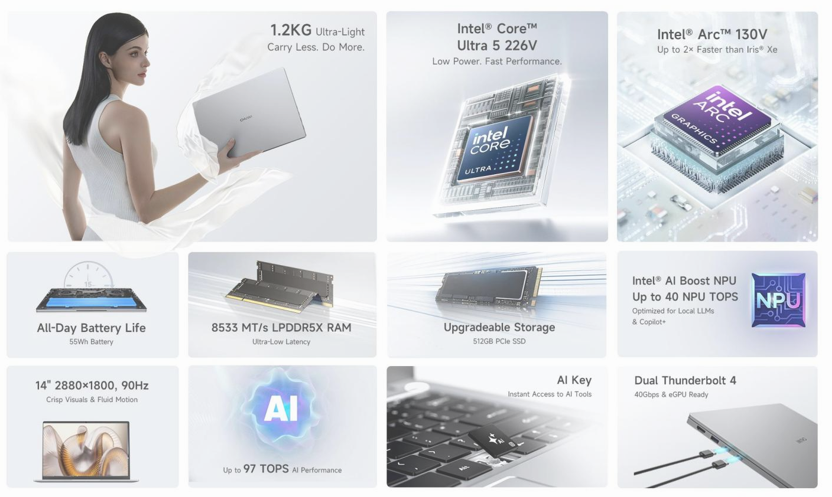
Is this the ultimate budget MacBook killer? 💻 CHUWI has officially launched the CoreBook Air—a next-generation Copilot+ PC that packs Intel’s revolutionary Lunar Lake power ⚡ and a stunning 2.8K 120Hz display 🖥️ into an ultra-light 1.2kg frame 🪶, all for an unbeatable early-bird price of $749. 💰
#CHUWI CoreBook Air
CHUWI has officially introduced the new CoreBook Air, a next-generation Copilot+ PC designed to deliver powerful AI capabilities 🤖, long battery life 🔋, and premium portability. According to CHUWI CEO Jesea Yang 🗣️, the CoreBook Air combines Lunar Lake performance and Copilot+ AI capabilities in an ultra-light 1.2kg design, helping bring advanced AI PCs to a wider audience at a more accessible price point. The company aims to make advanced AI-powered computing more accessible to students 🎓, professionals 💼, creators 🎨, and remote workers. 🏠
#CHUWI CoreBook Air
Premium Design Built for Portability ✨
The CHUWI CoreBook Air features a slim and lightweight design that weighs just 1.2kg, making it easy to carry throughout the day. 🎒 The laptop uses a premium CNC-crafted aluminum chassis that provides a durable and professional appearance while maintaining portability. Its compact form factor makes it suitable for students attending classes, content creators working on the move, business professionals, and remote workers who need a dependable travel companion. ✈️
#CHUWI CoreBook Air
Sharp 2.8K Display with Smooth Visuals 📺
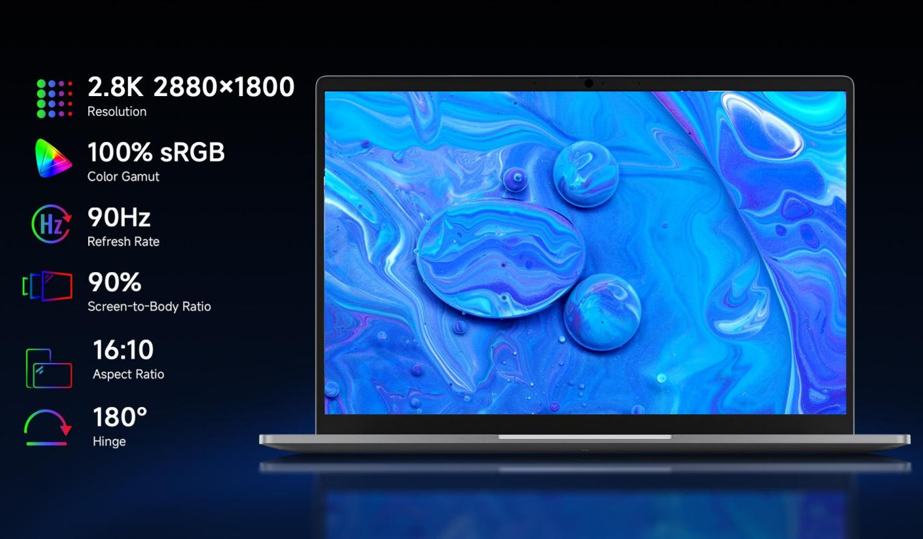
The laptop comes equipped with a 14-inch IPS display featuring a 2.8K resolution of 2880 × 1800 pixels. 🌈 It also supports a 120Hz refresh rate and covers 100% of the sRGB color gamut. This combination delivers sharper text, detailed visuals, smoother scrolling, and an improved video viewing experience. 🎬 The high-resolution panel is also designed to provide comfortable viewing during long work sessions. 👁️
Intel Lunar Lake Performance with Advanced AI 🧠
At the heart of the CoreBook Air is the Intel Core Ultra 5 226V processor based on Intel’s Lunar Lake (Series 2) architecture. ⚙️ The chip features 8 CPU cores and 8 threads, with boost frequencies reaching up to 4.5GHz. Users can expect strong computing performance, improved power efficiency, broad software compatibility, enhanced security, and advanced AI processing capabilities. 🚀
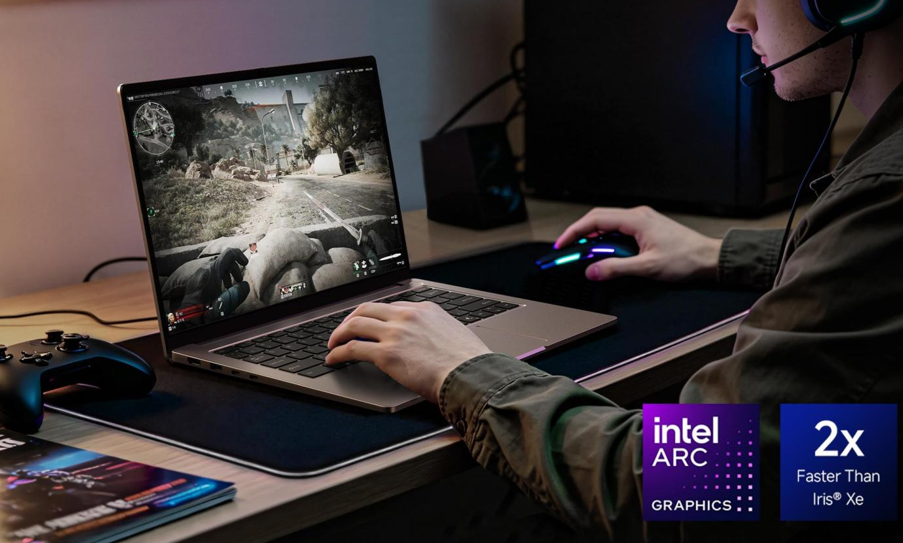
Graphics duties are handled by the integrated Intel Arc 130V GPU, which CHUWI claims can deliver up to twice the graphics performance of older Intel Iris Xe solutions. 🎮 The GPU supports hardware-accelerated ray tracing, casual gaming, content creation tasks, multimedia streaming, and GPU-accelerated applications. 🎞️
#CHUWI CoreBook Air
Copilot+ Features and AI Acceleration 🪄
One of the biggest highlights of the is its AI performance. The system delivers up to 97 TOPS of total AI computing power and includes an Intel AI Boost NPU capable of up to 40 NPU TOPS. ⚡ This dedicated AI hardware enables faster on-device AI processing, reduced dependence on cloud services, improved privacy, and quicker AI responses. 🛡️
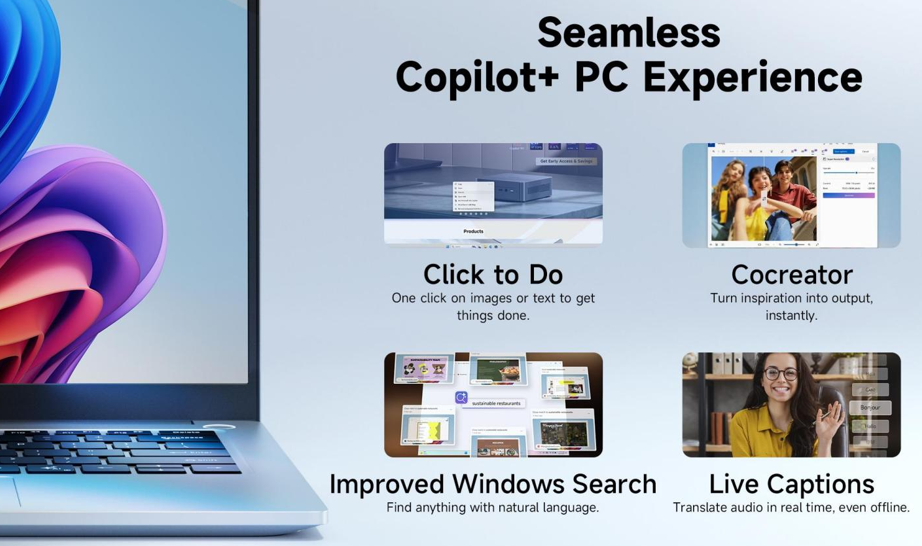
Running Windows 11 Pro out of the box, the laptop supports Microsoft Copilot+ PC experiences such as Click to Do, Cocreator, and Live Captions. ⌨️ A dedicated AI key also provides instant access to Microsoft Copilot. 🤖
Memory, Storage, Battery, and Connectivity 🔋
The CoreBook Air includes 16GB LPDDR5X memory running at 8533 MT/s using a memory-on-package design for faster multitasking, lower latency, and better efficiency. ⚡ Storage is handled by a 512GB PCIe SSD, while users can upgrade storage later through PCIe 4.0 x4 SSD support. 💾
A 55Wh battery powers the laptop and is rated for up to 15 hours of local video playback. ⏳ Charging is handled by a 65W USB-C Power Delivery adapter, capable of charging the battery to around 63% in approximately one hour. 🔌
For connectivity, the laptop supports Wi-Fi 6E for faster wireless speeds, lower latency, and improved stability. 📶 Port selection includes two Thunderbolt 4 ports with up to 40Gbps bandwidth, Power Delivery support, external display connectivity, and eGPU compatibility. Users also get three USB-A ports, an HDMI 2.0 output, and a 3.5mm audio jack. 🎧
Pricing and Availability 🏷️
The is available for pre-order now. 🛒 The laptop carries an official retail price of $799, but early buyers can take advantage of a limited-time Super Early-Bird discount of $50, reducing the launch price to $749. 📉 The promotional offer is available on a first-come, first-served basis while launch stock lasts. ⏰
CHUWI CoreBook Air – Specs Sheet
Category Specifications
Model CHUWI CoreBook Air
Operating System Windows 11 Pro
Copilot+ PC Certification Yes
Build Material Premium CNC-Crafted Aluminum Chassis
Weight Approx. 1.2 kg
Dimensions 312.9 × 222.5 × 16.8 mm
Display
Category Specifications
Display Size 14-inch
Panel Type IPS
Resolution 2880 × 1800 (2.8K)
Aspect Ratio 16:10
Refresh Rate 120Hz
Color Gamut 100% sRGB
Display Features Sharper text rendering, smoother scrolling, improved video playback, comfortable long-duration viewing
Performance
Category Specifications
Processor Intel Core Ultra 5 226V
Architecture Intel Lunar Lake (Series 2)
CPU Cores 8 Cores
Threads 8 Threads
Maximum Turbo Frequency Up to 4.5GHz
Graphics Intel Arc 130V GPU
Graphics Features Hardware-Accelerated Ray Tracing, Casual Gaming, Content Creation, Multimedia Streaming, GPU-Accelerated Applications
AI Processor Intel AI Boost NPU
NPU Performance Up to 40 TOPS
Total AI Performance Up to 97 TOPS (CPU + GPU + NPU)
Memory & Storage
Category Specifications
RAM 16GB LPDDR5X
Memory Speed 8533 MT/s
Memory Type Memory-on-Package
Storage 512GB PCIe SSD
Storage Expansion User Upgradeable
Expansion Support PCIe 4.0 x4 SSD Upgrades
Battery & Charging
Category Specifications
Battery Capacity 55Wh
Video Playback Up to 15 Hours Local Video Playback
Charger 65W USB-C Power Delivery Adapter
Fast Charging Supported
Charging Speed Up to 63% Charge in Approximately 1 Hour
AI Features
Category Specifications
AI Platform Copilot+ PC
AI Key Dedicated Microsoft Copilot Key
AI Workloads Local AI Processing, AI Productivity, Creative AI Workflows, LLM Inference
Supported Features Click to Do, Cocreator, Live Captions
Privacy Benefits Enhanced Local AI Processing with Reduced Cloud Dependency
Ports & Connectivity
Category Specifications
Thunderbolt Ports 2× Thunderbolt 4
Thunderbolt Features 40Gbps Data Transfer, Power Delivery Charging, Video Output, eGPU Support
USB Ports 1× USB 3.2 Gen 2 Type-A (10Gbps)
1× USB 3.2 Gen 1 Type-A (5Gbps)
1× USB 2.0 Type-A (480Mbps)
HDMI 1× HDMI 2.0 (Up to 4K @ 60Hz)
Audio Port 3.5mm Headphone/Microphone Jack
Wireless Connectivity
Category Specifications
Wi-Fi Wi-Fi 6E
Bluetooth Bluetooth 5.3
Camera & Multimedia
Category Specifications
Webcam 2MP Camera
Privacy Feature Physical Privacy Shutter

Tech4 months ago
JBL Live 780NC and Live 680NC Debut 🎉 in India: Featuring True Adaptive ANC, Spatial Audio, and Up to 80 Hours of Battery Life 🔋

Tech4 months ago
Vivo X Fold 6 Set to Redefine Foldables with a 7,000mAh Battery 🔋 and IPX8/IPX9 Durability 🛡️

Tech4 months ago
Why Next-Gen AI Smartphones May Ditch LPDDR for LLW 🪐

Entertainment9 years ago
The final 6 ‘Game of Thrones’ Trailer

Smartphones5 months ago
Oppo Android 17 (ColorOS 17) update: Full list of eligible devices 📱📲

Entertainment9 years ago
The old and New Edition cast comes together to perform

Videos5 months ago
Vivo X Fold 6 with Dimensity 9500 ⚙️, 200MP triple cameras to launch by June end 🚀

Videos8 months ago
Marvel Tōkon: Fighting Souls 🥊 arrives on PS5 and PC 🎮 this August 6, bringing the X-Men ❌ along for the ride.

Entertainment8 months ago
Samsung Galaxy Unpacked 2026 📅: The Galaxy S26 series ✨,
-
 Entertainment9 years ago
The final 6 ‘Game of Thrones’ Trailer
-
 Smartphones5 months ago
Oppo Android 17 (ColorOS 17) update: Full list of eligible devices 📱📲
-
 Entertainment9 years ago
The old and New Edition cast comes together to perform
-

 Buying9 years ago
Phillies’ Aaron Altherr makes mind-boggling barehanded play
-

 Videos9 years ago
Uber and Lyft are finally available in all of New York State
-

 Entertainment9 years ago
Disney’s live-action Aladdin finally finds its stars
-

 Buying9 years ago
Steph Curry finally got the contract he deserves from the Warriors
-

 Smartphones9 months ago
OnePlus 16 May Borrow Massive 9,000mAh Battery From Turbo 6 Series 🔋⚡