
Tech
Edifier Launches FitBuds Turbo: Budget-Friendly Earbuds with LDAC, 49dB ANC, and 40-Hour Battery Life 🚀🎧🔋


Edifier has expanded its audio lineup 🎧 in China 🇨🇳 with the launch of the FitBuds Turbo 🚀, a highly competitive pair of budget-friendly wireless earbuds 💸. Priced at an affordable 259 yuan (around $38) 💰, the new earbuds are now officially available for purchase on JD.com 🛒.
# Edifier
Edifier FitBuds Turbo 🎧✨
Edifier FitBuds Turbo Specifications & Features 📋⚙️
Sporting a classic short-stem form factor, each earbud weighs a lightweight 4.4 grams 🪶 for comfortable, all-day wear 😌. They feature an IP54 dust and water resistance rating 💦, making them durable enough to withstand sweat and light rain during daily commutes 🚶♂️ or workouts 🏃♀️. Additionally, Edifier has equipped them with antibacterial silicone ear tips 🛡️, which are claimed to block up to 99.9% of bacteria for improved hygiene 🧼.
Moving away from the typical glossy plastic finish, the charging case boasts a premium textured, faux-leather wrap 💼 accented by sleek metallic details ✨, offering a more secure grip and a touch of sophistication 💎. Users can choose from three stylish colorways: Dawn White 🤍, Mystery Blue 💙, and Sakura Pink 🌸.
Under the hood, the FitBuds Turbo deliver rich sound 🎵 via 10mm dynamic drivers featuring a high-quality PU and PEEK composite diaphragm 🔊. To appeal to audiophiles, the earbuds are Hi-Res Audio Wireless certified 🏆 and support the high-resolution LDAC codec for lossless, detailed audio streaming 🎶.
Edifier FitBuds Turbo 🎧🔥
Noise cancellation is another strong suit, with an active noise cancellation (ANC) system 🤫 capable of silencing ambient noise by up to 49dB 📉. When it comes to voice calls, the earbuds utilize a comprehensive six-microphone array—three on each side 🎙️—coupled with intelligent AI noise-reduction algorithms 🤖 to isolate your voice and ensure crystal-clear conversations 🗣️ even in noisy environments.
Battery performance is highly impressive 🔋, offering up to 9 hours of continuous playback on a single charge ⚡. When paired with the charging case, the total battery life stretches to a generous 40 hours ⏳. The case supports fast charging via USB-C 🔌, where a quick 15-minute top-up yields up to 2 hours of playback ⏱️.
On the connectivity front, the FitBuds Turbo utilize advanced Bluetooth 6.0 technology 📶 and support seamless multipoint pairing 🔗, allowing users to connect to two devices simultaneously 📱💻. Gamers will appreciate the ultra-low latency mode of just 45ms 🎮. Furthermore, the companion app 📱 unlocks a suite of smart features, including spatial audio effects 🌌, real-time translation for 21 languages 🗣️🌐, and smart voice assistant integration powered by DeepSeek and Doubao AI models 🤖.
In other recent audio developments 📰, Dangbei recently introduced its Air 1S clip-on earbuds 🎧, which feature an innovative 2.04-inch touchscreen case 📱, AI translation 🤖, and LHDC 5.0 support 🎶. Meanwhile, Edifier also expanded its open-ear lineup with the LolliClip SE 💫, boasting Dolby Spatial Audio 🌌, AI-powered transcription 📝, and an impressive 40-hour battery life 🔋.







Tech
JBL Live 780NC and Live 680NC Debut 🎉 in India: Featuring True Adaptive ANC, Spatial Audio, and Up to 80 Hours of Battery Life 🔋

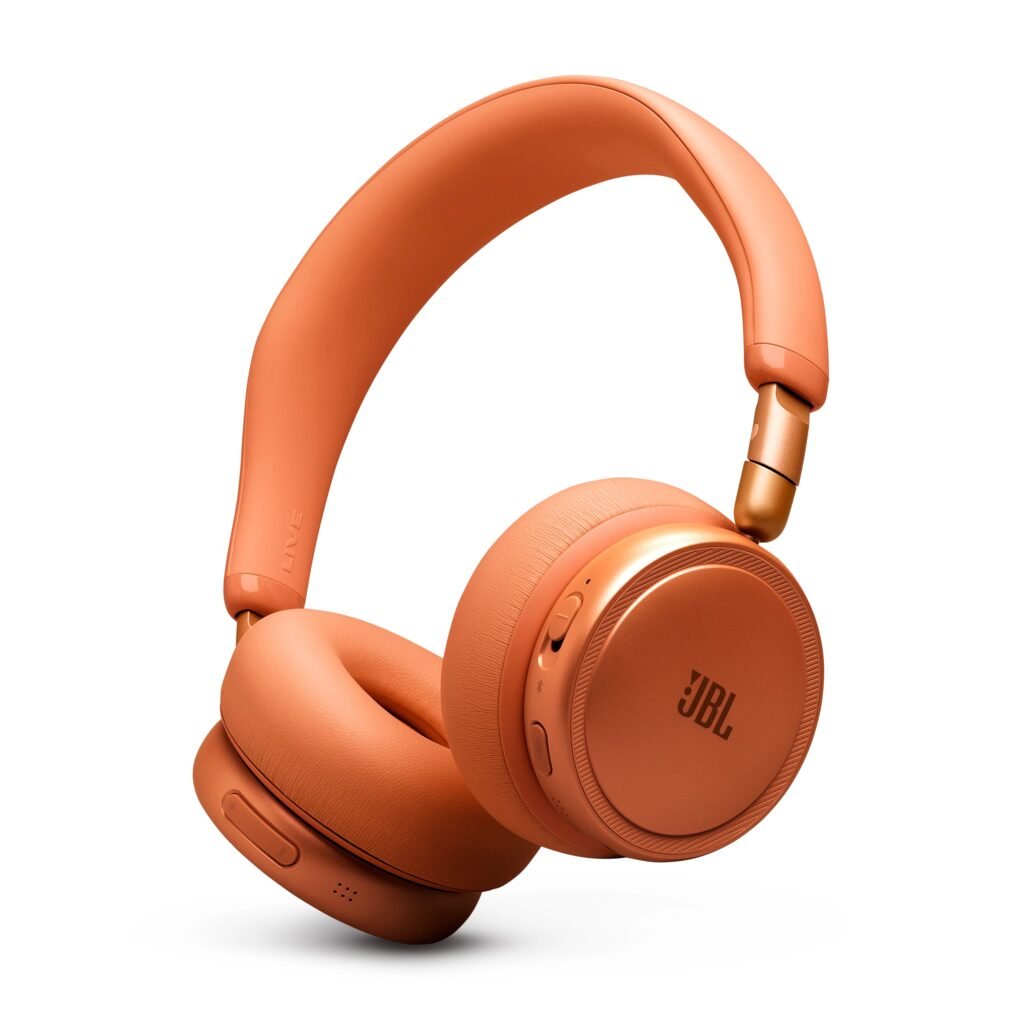
JBL has expanded its wireless audio portfolio 🎧 in India with the launch 🚀 of two premium headphones: the JBL Live 780NC and the JBL Live 680NC. Designed for users seeking a blend of style and substance, these new offerings promise immersive sound 🔊, robust active noise cancellation, and exceptional battery life.
Intelligent Audio 🧠: Advanced ANC, Spatial Sound 🪐, and AI-Enhanced Calls 🤖
Catering to different style preferences 🎨, the JBL Live 780NC features a comfortable over-ear design, while the Live 680NC offers a more compact on-ear profile. Under the hood, both models are powered by 40mm dynamic drivers and feature JBL Spatial Sound 3.0, bringing a theater-like depth 🎭 to your music, movies, and podcasts 🍿. Additionally, users can craft a bespoke listening profile using Personi-Fi 3.0, which calibrates the audio output to match their unique hearing sensitivity 👂.
To block out distractions 🛡️, both models leverage JBL’s True Adaptive Noise Cancelling 2.0 technology. The over-ear Live 780NC utilizes a six-microphone array to monitor and neutralize ambient noise, while the on-ear Live 680NC relies on a highly capable four-microphone system. When it comes to voice calls, dual beamforming microphones work in tandem with an AI-driven noise-reduction algorithm to ensure crystal-clear 🔮 conversations, even in bustling environments.
On the connectivity front 🔗, the headphones are equipped with Bluetooth 6.0, multipoint pairing for seamless device switching, and Auracast support. Audiophiles will appreciate the high-resolution wireless audio enabled by LDAC codec support on compatible devices. Battery life 🔋 is another major selling point: both models deliver an impressive 80 hours of playback with ANC off, and up to 50 hours with ANC activated. If you’re in a rush, a quick five-minute charge ⚡ provides up to four hours of listening time.
Pricing and Availability Details 🏷️
The premium 🏆 JBL Live 780NC is priced at Rs 15,999 (approximately $170), while the on-ear JBL Live 680NC comes in at Rs 11,999 (around $130). Both models are available in an array of seven vibrant colorways 🌈: Black, Blue, White, Champagne, Green, Orange, and Purple. Early birds can pre-book 🎟️ the Live 780NC starting June 18 via Amazon and JBL India’s official website to enjoy a limited-time Rs 2,000 discount and a complimentary one-year extended warranty 🛡️.
The JBL Live 780NC is set to officially hit the shelves 🛍️ during Amazon Prime Day 📦, alongside availability at major retail stores. Meanwhile, the Live 680NC will be available for purchase starting July 15.
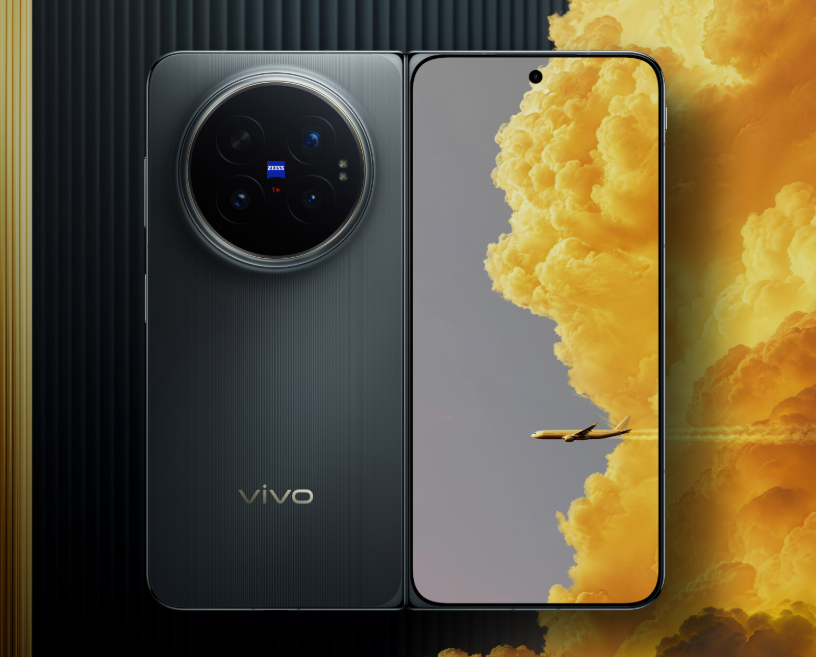
Vivo has released an exciting new demonstration video 📹 showcasing the real-world capabilities of its highly anticipated Vivo X Fold 6 📱. Rather than simply boasting about raw processing power or camera specs, the brand is shifting the spotlight to the features that truly impact daily use for frequent travelers ✈️ and power users: exceptional battery life 🔋, rugged durability 🛡️, and rock-solid connectivity 📶.
Vivo X Fold 6: Massive Battery 🔋 and Next-Gen Durability Confirmed 🏆
Vivo’s Product Manager, Han Boxiao, officially confirmed that every variant of the Vivo X Fold 6 will be powered by a massive 7,000mAh Blue Ocean battery 🌊. Setting a new industry benchmark 🚀, this cutting-edge foldable is set to be the first smartphone to leverage fifth-generation silicon-anode battery technology, paired with Vivo’s own third-generation semi-solid-state battery tech 🧪 to deliver unprecedented efficiency and longevity.
According to Boxiao, deep, multi-level optimization ⚙️ of the Blue Ocean battery system allows the device to survive up to 9.8 hours under the heavy workloads of Vivo’s Atomic Workbench 🧬. This translates to an impressive 30 percent leap in overall battery life compared to previous generations ⚡.
To prove its rugged credentials, Vivo put the phone through its paces in extreme environments 🌋. The X Fold 6 remained fully operational in freezing temperatures as low as -20°C ❄️, and was even demonstrated functioning seamlessly underwater 🤿. Boasting robust IPX8 and IPX9 water-resistance ratings, the device is built to withstand high-pressure jets and submersion 🧊. Additionally, a newly engineered, lightweight hinge ensures smooth, reliable folding action designed to last for years 🔄.
Uncompromising connectivity is another standout feature 📡. The Vivo X Fold 6 debuts the upgraded Global Signal Amplification System 3.0, powered by a proprietary “1+4” communication chipset architecture 🕹️. This innovative setup combines a dedicated signal amplification chip with four Wi-Fi enhancement chips, specifically engineered to maintain a strong connection in notorious dead zones 🔮.
In a dramatic display of this technology, Vivo demonstrated a crystal-clear voice call made during a skydive 🪂 from an altitude of 4,000 meters—proving the phone’s ability to rapidly lock onto and hold network signals under extreme conditions 🛸. This upgraded system is tailor-made to deliver seamless coverage on high-speed trains 🚄, inside elevators, along remote highways, and in other notoriously difficult signal areas 🍀.
These upgrades build on previously confirmed flagship specs, including a stunning 8.02-inch foldable OLED inner display reaching a peak brightness of 5,000 nits ☀️, the powerhouse Dimensity 9500 Super Edition chipset 💎, and a versatile triple-camera array. This setup features a massive 200-megapixel primary sensor 📸, a 50-megapixel ultra-wide lens, and a 50-megapixel periscope telephoto camera. Notably, it will also be Vivo’s first foldable to support an innovative telephoto extender attachment 🔭.
Buyers will be able to choose from multiple configurations 🛍️, including 12GB+256GB, 12GB+512GB, 16GB+512GB, and a top-tier 16GB+1TB variant 💾. The phone will debut in striking colorways: Blue Cave, Salt Lake, Polar Night, and a premium Black Gold Edition 🎨. The Vivo X Fold 6 is slated for an official launch in China on June 26, with a global rollout expected to follow shortly after in July 🌍.
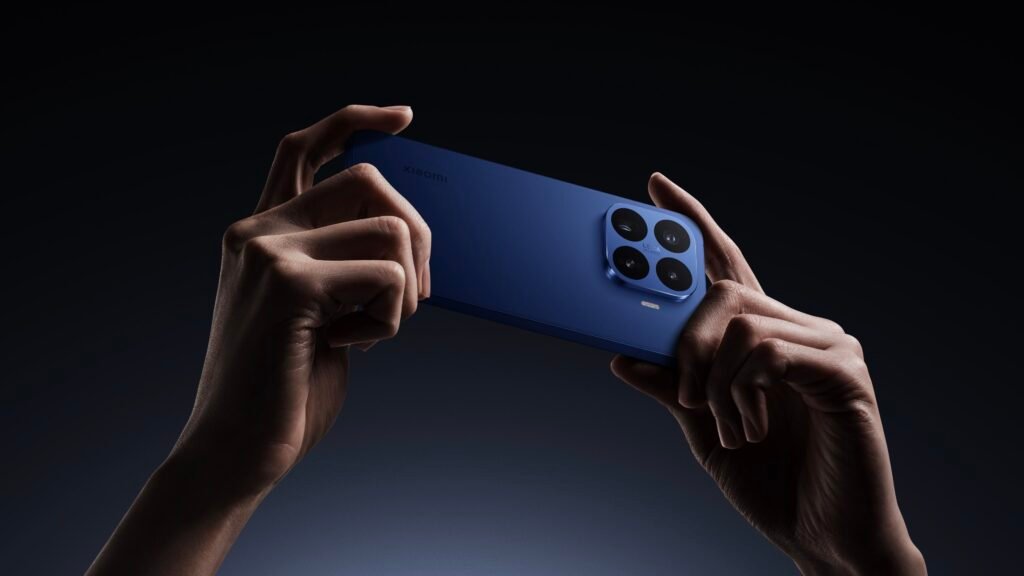
Smartphones 📱 are hitting a major memory bottleneck, and it is not something a simple software update can resolve. While modern mobile processors are fully capable of running large language models (LLMs) locally, on-device AI 🧠 is pushing hardware to its absolute limits.
The real bottleneck lies in current LPDDR memory technology, which struggles to feed data to these processors fast enough to keep up with AI demands. It is this exact challenge 🎯 that forces AI datacenters to rely on ultra-fast High Bandwidth Memory (HBM) ⚡.
To bridge this gap, a new memory standard called LLW (Low Latency Wide DRAM) is currently in development 🧬, promising to solve the mobile bottleneck once and for all 🔮.
LLW: The HBM-Style Solution for Smartphones 🚀
LLW takes a page out of the HBM playbook. HBM achieves blistering speeds ⚡ by stacking multiple memory layers close to the processor and linking them through an incredibly wide interface. This architecture delivers massive bandwidth, potentially performing 10 to 15 times faster 💥 than today’s top-tier LPDDR memory.
However, traditional HBM requires complex packaging and heavy-duty cooling 🧊 that simply won’t fit inside a smartphone. LLW aims to deliver the best of both worlds: offering the high bandwidth and low latency of stacked memory without the thermal and physical space constraints that usually come with it 💎.
Xiaomi 17T and 17T Pro: Early Adopters? 👀
Of course, these early rumors should be taken with a grain of salt 🧂. The current details stem from industry bloggers and tech tipsters rather than official manufacturer roadmaps.
According to a leak from tipster Fixed Focus Digital, LLW memory could slash power consumption by up to 50% 🔋 while simultaneously boosting overall performance by 1.5 times.
We will have to wait a while ⏳ to see this technology in action. The leak indicates that widespread adoption of LLW is still a few years away, with large-scale deployment not expected until the second half of 2027. When it does arrive, Xiaomi and Huawei are rumored to be among the first to adopt it, though neither brand has officially confirmed these plans 🏆.

Tech4 months ago
JBL Live 780NC and Live 680NC Debut 🎉 in India: Featuring True Adaptive ANC, Spatial Audio, and Up to 80 Hours of Battery Life 🔋

Tech4 months ago
Vivo X Fold 6 Set to Redefine Foldables with a 7,000mAh Battery 🔋 and IPX8/IPX9 Durability 🛡️

Tech4 months ago
Why Next-Gen AI Smartphones May Ditch LPDDR for LLW 🪐

Entertainment9 years ago
The final 6 ‘Game of Thrones’ Trailer

Smartphones5 months ago
Oppo Android 17 (ColorOS 17) update: Full list of eligible devices 📱📲

Entertainment9 years ago
The old and New Edition cast comes together to perform

Videos5 months ago
Vivo X Fold 6 with Dimensity 9500 ⚙️, 200MP triple cameras to launch by June end 🚀

Videos8 months ago
Marvel Tōkon: Fighting Souls 🥊 arrives on PS5 and PC 🎮 this August 6, bringing the X-Men ❌ along for the ride.

Entertainment8 months ago
Samsung Galaxy Unpacked 2026 📅: The Galaxy S26 series ✨,
-
 Entertainment9 years ago
The final 6 ‘Game of Thrones’ Trailer
-
 Smartphones5 months ago
Oppo Android 17 (ColorOS 17) update: Full list of eligible devices 📱📲
-
 Entertainment9 years ago
The old and New Edition cast comes together to perform
-

 Buying9 years ago
Phillies’ Aaron Altherr makes mind-boggling barehanded play
-

 Videos9 years ago
Uber and Lyft are finally available in all of New York State
-

 Entertainment9 years ago
Disney’s live-action Aladdin finally finds its stars
-

 Buying9 years ago
Steph Curry finally got the contract he deserves from the Warriors
-

 Smartphones9 months ago
OnePlus 16 May Borrow Massive 9,000mAh Battery From Turbo 6 Series 🔋⚡