
Buying
Fitbit Ace LTE review: A kids’ activity tracker that was fun for me, an adult

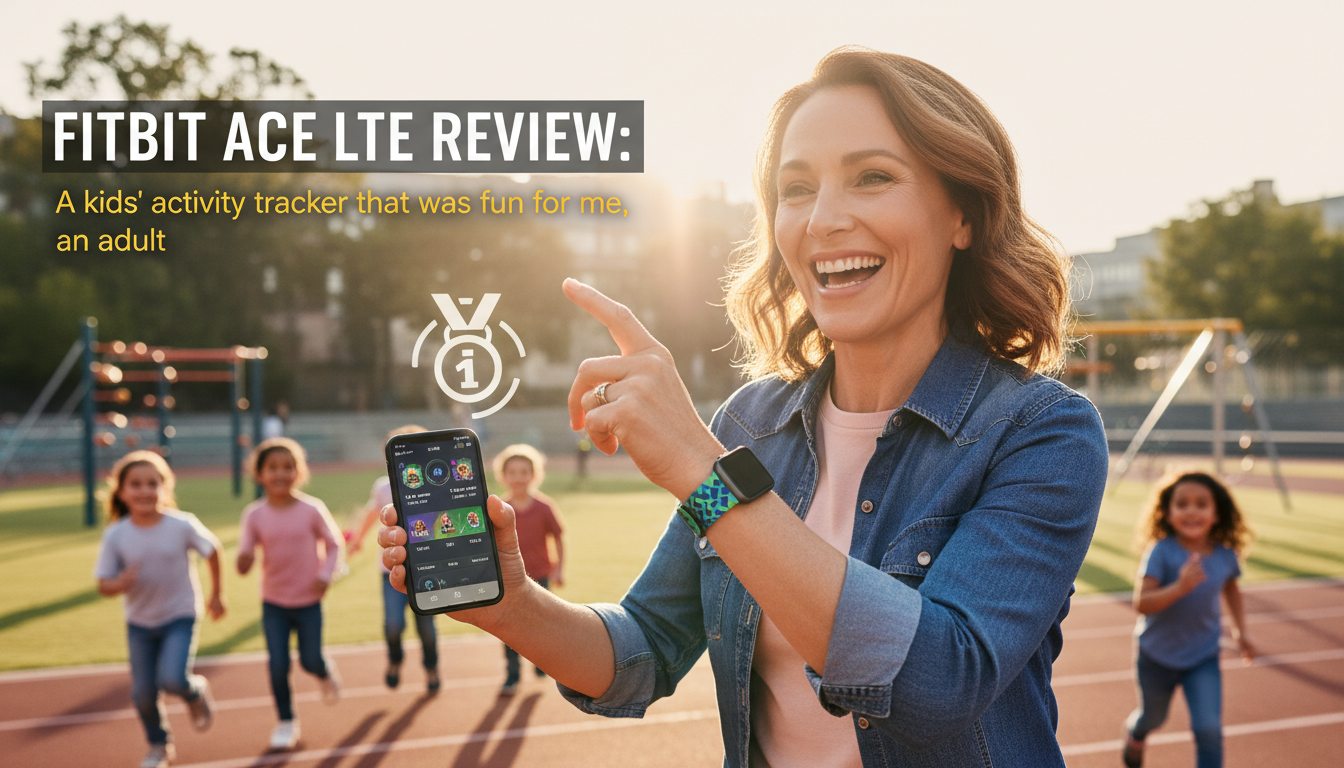
Lately, I’ve found myself doing jumping jacks in the kitchen an hour before bed more often than I’d care to admit.
It’s not my preferred time to exercise, but a glance at my wrist usually revealed I was so close to hitting my Move Goal—yet not close enough that simply shuffling through my nightly routine would finish the job. I wasn’t about to end the day without seeing the elongated blue cat on my watch face vomit ice cream and turn rainbow-colored. In technical terms, that means closing my movement ring to trigger the celebratory animation. Suffice it to say, the Fitbit Ace LTE has proven to be an effective motivator.
How the Fitbit Ace LTE works
The Fitbit Ace LTE is Google’s newest kid-focused activity tracker. It offers some smartwatch features, such as location tracking and the ability to call or text parent-approved contacts who have the Fitbit Ace companion app. While the hardware resembles the company’s adult Sense and Versa lines more than the original Fitbit Ace, the experience is designed to be far more playful.
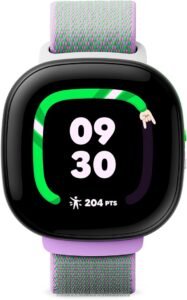
The digital clock face, for instance, features a faint ring that slowly transforms into a cartoonish “Noodle” design as you rack up activity points. These characters include the aforementioned cat, a dog, a robot arm, and a deeply unsettling anthropomorphic hotdog that hits a very specific pre-tween humor frequency. By swapping the Ace LTE’s “Cartridge” band with other styles (sold separately), you can unlock different Noodles and themes. There are also built-in movement games, including quirky interpretations of kart racing, golf, and fishing.
Meet the eejie
Central to the experience is the eejie: a customizable humanoid creature living in the device that relies on your daily activity to stay happy.

I’ll admit, the eejie didn’t immediately appeal to me. I generally prefer my virtual companions to look like weird little critters rather than humans. However, after designing my own, I couldn’t help but get attached. With plenty of skin tones, eye shapes, and hair types to choose from, you can make your eejie as human or nonhuman as you like. Character creation is engaging, and I can see kids loving the process of crafting their virtual friends and unlocking new outfits. My eejie is currently a spooky-cute, purple-skinned Nosferatu lookalike sporting a giant pink bow.
The Daily Quests and Arcade are the real stars here, serving as the primary motivators for movement. You get four new quests each day—a manageable amount that feels achievable without taking over a child’s life. These typically involve playing a game (picking up right where you left off) and hitting a Move Goal set in the app. The other tasks are less physically demanding, like visiting Bit Valley to see the eejies or learning a quick health fact. Occasionally, these tasks include simple mindfulness exercises—a thoughtful touch I’m sure parents will appreciate.
Known as Community Notes, these challenges asked me to observe the sights and smells around me or turn off the lights in an empty room. The watch also offers fun context for your goals, comparing 5,000 steps to “the length of 33,333 hot dogs.” Gentle notifications remind you to complete quests, though parents can silence these during “School time” to prevent distractions.
Games on the Fitbit Ace LTE
Completing game quests was effortless for me, and I imagine it will be for kids, too. The games are surprisingly fun—more so than I expected. Currently, the Fitbit Ace LTE includes six titles: Kaiju Golf, Pollo 13, Jelly Jam, Smokey Lake, Galaxy Rangers and Otal’s Secret. Google has promised periodic updates to keep the library fresh, with two more—Spirit Garden and a virtual pet game called Sproutlings—already announced.
The games do require some patience; load times are slow, and the initial setup involves tapping through far too many dialogue boxes. It made me antsy, so I can only imagine a child squirming through it. However, once you’re in, the experience is smooth. The catalog offers a nice variety, catering to both active and relaxed play styles.
Pollo 13, where you race a chicken through space in a tub, had me physically moving and shouting. On the other hand, Otal’s Secret is a puzzle game I played from the comfort of my couch. Despite the small screen, the interface is well-designed and easy to navigate.
Playtime is limited; eventually, the game pauses and prompts you to move to unlock more time. You only get back in after hitting certain activity milestones. Usually, this encouraged me to play in short bursts as I naturally accumulated points throughout the day. However, when I had free time, I’d actively seek out exercise—taking a brisk walk or, yes, doing those jumping jacks—to unlock the next level immediately.
After months of using a Fitbit Charge 6, I found the Ace LTE made me a far more active participant in my fitness. My Charge 6 passively tracks my habits, but the Ace LTE’s visual rewards feel like a genuine celebration rather than a boring notification, motivating me to earn them. Beyond the Noodle animations, I was occasionally surprised by a pug piñata I could tap to break open, revealing rewards like arcade tickets to buy items for my eejie.
Fitbit also cleverly leverages guilt. The eejie’s mood is tied to your quest completion. Seeing her look dejected after I neglected my goals for a few days ensured I never wanted to let her down again.
The Fitbit Ace LTE versus Tamagotchi and Digimon
These features make the Ace LTE an excellent health device for kids. Honestly, if Fitbit brought these gamified elements to their adult trackers via a software update, I’d install it immediately. The device is essentially a fully realized version of the concept toys like Tamagotchi and Digimon have attempted with wearable virtual pets: strapping a companion to your wrist to encourage movement through play.
Bandai’s Digimon Vital Bracelet—released in Japan in 2021 and later in the US as the Vital Hero—took a direct approach, using steps and heart rate to influence monster evolution. It also featured battles via a companion app and expandable content through DIM cards.
Similarly, the Tamagotchi Uni (2021) expanded on basic step-counting with “Tama Walks,” a 20-minute activity where your pet collects crafting supplies. The success of these outings depends on your real-world movement, directly linking physical activity to your pet’s happiness.
However, because the Fitbit Ace LTE is a sophisticated fitness device rather than a toy, it goes much further. Its game Jelly Jam, for example, mirrors a dancing game found on the Tamagotchi Uni and the Japan-exclusive Tamagotchi Smart. I quickly bored of the Tamagotchi version because the sensors were unreliable. In contrast, the Fitbit Ace LTE’s arm-tracking dance game is actually fun because it works as intended.
Best of all, it can go anywhere. I wore it swimming, horseback riding, and even during dance classes. It’s lightweight and never felt cumbersome.
I do wish interaction with the eejie went deeper than dress-up—feeding or playing with it directly would be nice. Currently, it feels more like a mascot than a pet. I’d also love to see more animal-like options in future updates. My main gripe, however, is battery life. It requires nightly charging, which kids might forget; I often woke up to a dead battery myself. It also lacks sleep tracking.
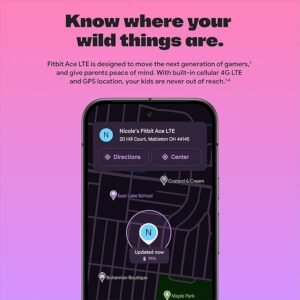
That said, the watch offers peace of mind for parents alongside its wellness features. The calling and messaging are basic but functional, providing a secure way for trusted contacts to reach their kids.
Call quality is decent on both ends, and location sharing is accurate. The Fitbit Ace app is user-friendly, with a simple interface that even non-tech-savvy users can navigate easily.
It isn’t a full-featured smartwatch with an app store or open communication, but those limitations are intentional to minimize risk. For a device aimed at kids 7 and up, it’s a worthy trade-off. At $230 plus a $10/month Ace Pass (which provides LTE without a new phone line), it is an investment. However, it’s designed to grow with a child well into their pre-teen years without feeling childish. Remove the bright green protective bumper, and it looks just like a standard smartwatch.
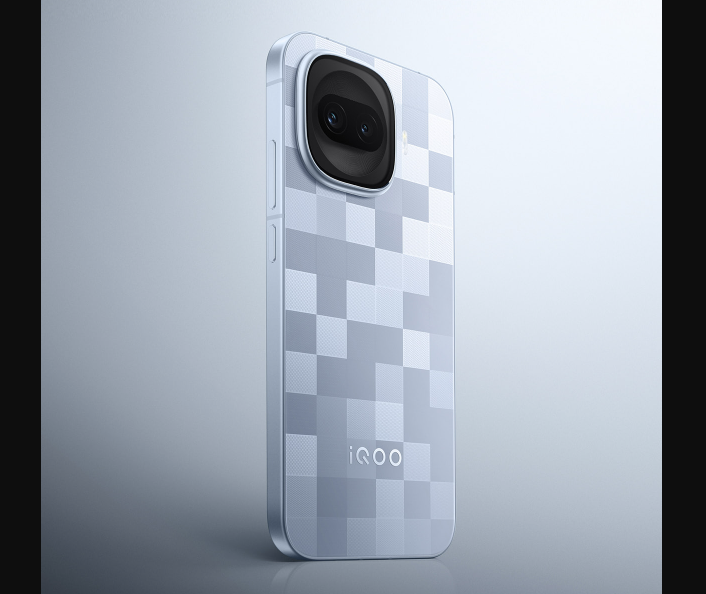
With the iQOO 15R 5G scheduled to launch in India 🇮🇳 on February 24 📅, anticipation is building. While the company has previously confirmed key hardware details—including the inclusion of the cutting-edge Snapdragon 8 Gen 5 chipset ⚡—a fresh leak has now filled in the final piece of the puzzle: the pricing 🧩💸.
#iQOO 15R
iQOO 15R Pricing 🏷️
Citing tipster PassionateGeekz on X 🕵️♂️, reports suggest the iQOO 15R 5G will start at Rs 45,999 for the base variant featuring 8GB of RAM and 256GB of storage 💾. For users requiring more memory, the 12GB + 256GB model is expected to launch at Rs 47,999, while the top-tier 12GB + 512GB configuration is tipped to retail for Rs 52,999 📈.
iQOO 15R 5G Specifications ⚙️
Under the hood, the iQOO 15R 5G is a powerhouse driven by the Snapdragon 8 Gen 5 processor 💪, running on OriginOS 6 based on Android 16 🤖. In terms of longevity, the company has committed to an impressive support window, promising four years of Android OS updates 🔄 alongside six years of security patches 🛡️.
Endurance appears to be a major focus, with the device housing a massive 7,600mAh battery 🔋 supported by 100W FlashCharge technology ⚡. To maintain peak performance under load, iQOO is reportedly employing a 6.5K IceCore VC cooling system to keep thermals in check ❄️🧊.
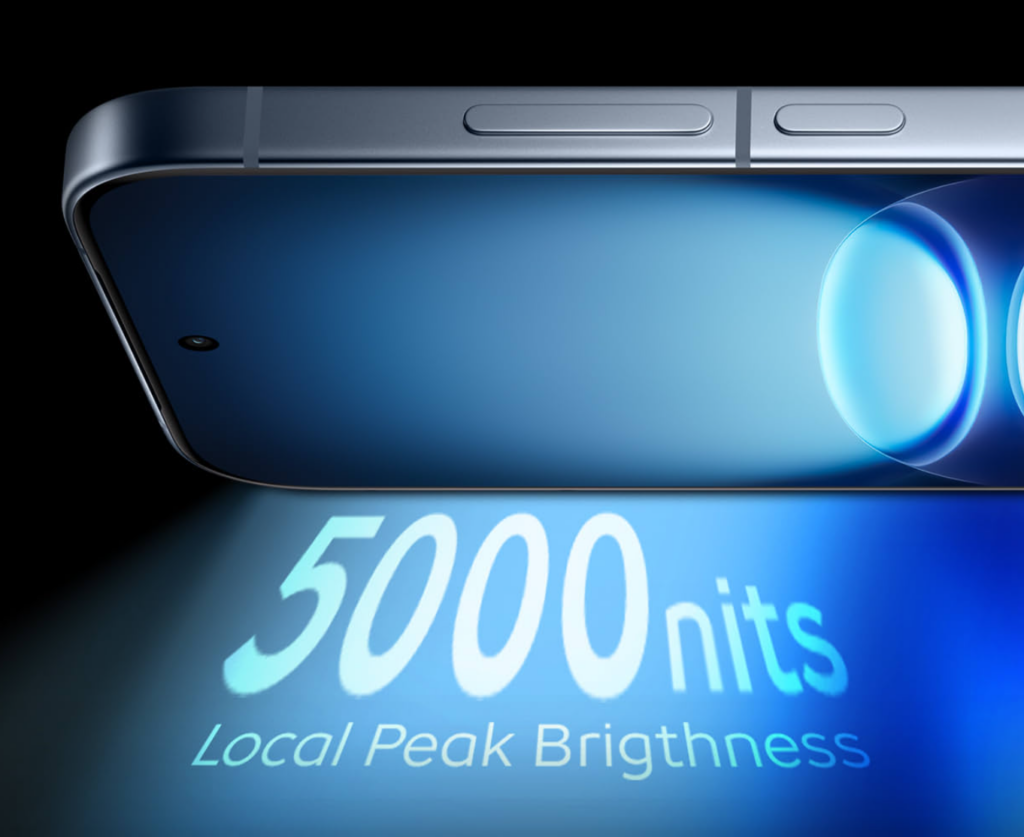
Visually, the iQOO 15R 5G is expected to impress with a 1.5K AMOLED panel boasting a smooth 144Hz refresh rate ✨📺. Marketed as an “EyeCare” display, the screen supports HDR10+ and is capable of reaching a blinding 5,000 nits of local peak brightness ☀️.
Photography duties are handled by a dual rear camera system 📸, headlined by a 50-megapixel Sony LYT-700V primary sensor with optical image stabilisation (OIS) 📷. This is complemented by an 8-megapixel ultra-wide lens, though specific details regarding the front-facing camera remain under wraps 🤫.
Rounding out the package, the smartphone offers robust durability with both IP68 and IP69 ratings for dust and water resistance 💧🌪️. It also features an ultrasonic in-display fingerprint scanner ☝️ and a full suite of connectivity options, including Wi-Fi 7, Bluetooth 6.0, NFC, and an IR blaster 📶📡. The device will be available in two distinct colourways: Triumph Silver 🥈 and Dark Knight 🌑.
Buying
Federer makes history with eighth Wimbledon, 19th major title
Quis autem vel eum iure reprehenderit qui in ea voluptate velit esse quam nihil molestiae consequatur, vel illum qui dolorem.

Buying
Signings, trades shift balance of power across the NHL
Temporibus autem quibusdam et aut officiis debitis aut rerum necessitatibus saepe eveniet ut et voluptates.

Roborock unveils the P20 Max: A vacuum powerhouse with 35,000Pa suction & AI smarts 🤖🌪️🧠

Vivo reportedly testing a massive single-cell 12,000mAh smartphone 📱🔋

Xiaomi Electric Scooter 6 Ultra poised for global debut: 75km range and 1200W peak power 🛴🌍🔋⚡

The final 6 ‘Game of Thrones’ Trailer

The old and New Edition cast comes together to perform

Phillies’ Aaron Altherr makes mind-boggling barehanded play

Marvel Tōkon: Fighting Souls 🥊 arrives on PS5 and PC 🎮 this August 6, bringing the X-Men ❌ along for the ride.

Samsung Galaxy Unpacked 2026 📅: The Galaxy S26 series ✨,

Bradley the Badger channels Wreck-It Ralph in a meta video game adventure 🦡🕹️
-
 Entertainment9 years ago
The final 6 ‘Game of Thrones’ Trailer
-
 Entertainment9 years ago
The old and New Edition cast comes together to perform
-
 Buying9 years ago
Phillies’ Aaron Altherr makes mind-boggling barehanded play
-

 Videos9 years ago
Uber and Lyft are finally available in all of New York State
-

 Entertainment9 years ago
Disney’s live-action Aladdin finally finds its stars
-

 Buying9 years ago
Steph Curry finally got the contract he deserves from the Warriors
-

 Entertainment9 years ago
From ‘Dick Clark’s New Year’s Rockin’ Eve’ 🎸 to ‘Nashville’s Big Bash,’ 🤠
-
Buying9 years ago
Boxing continues to knock itself out with bewildering, incorrect decisions