
Samsung
Samsung Galaxy XR hands-on: A smarter, more open take on Apple’s Vision Pro for half the price 🥽💰

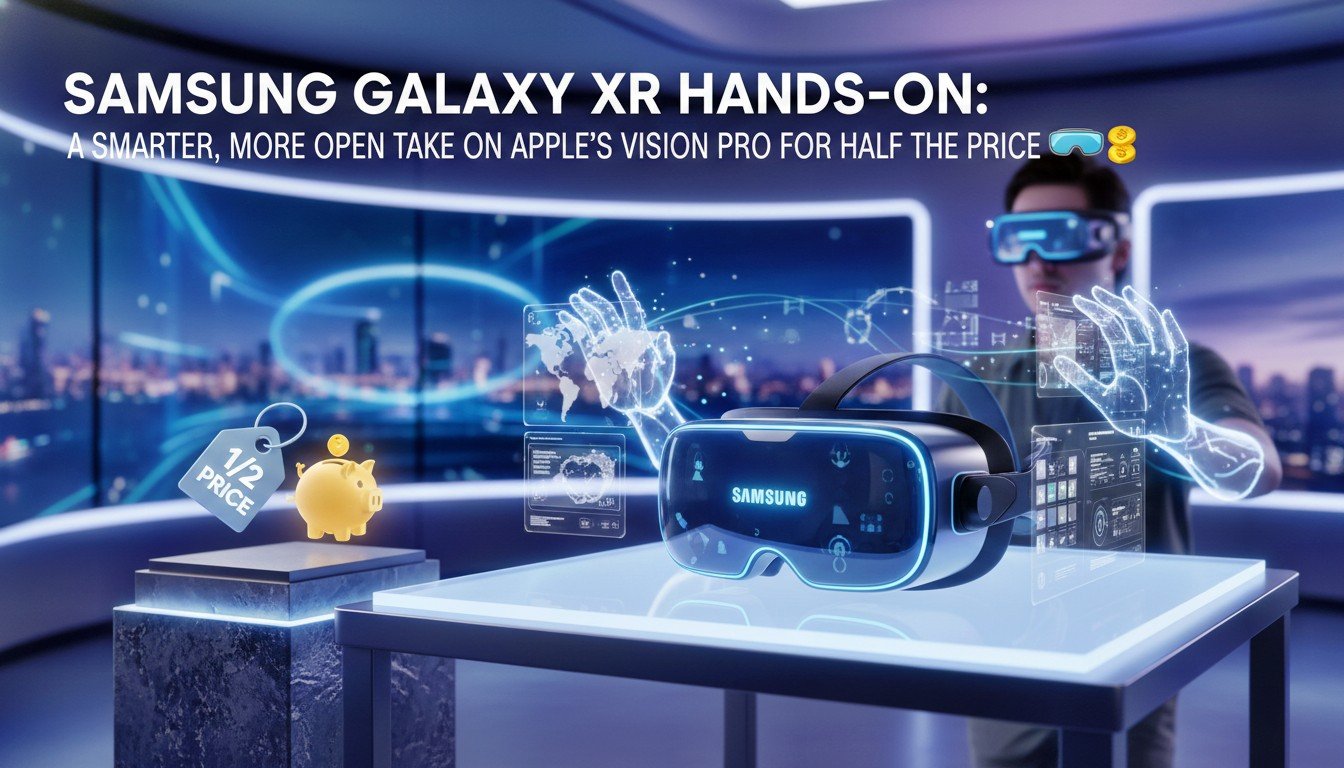

#Samsung Galaxy XR
Apple’s Vision Pro was meant to usher in a new era for headsets 🚀. However, its high price 💸 and somewhat limited utility resulted in what may be the company’s biggest flop in years 📉. Now it’s time for Samsung to give things a go with the Galaxy XR ✨. It’s a fresh take on modern mixed reality goggles developed through deep partnerships with Qualcomm and Google 🤝 and it attempts to address some of the Vision Pro’s biggest shortcomings 🛠️.
While both Apple and Samsung’s headsets have a lot of similarities (like their basic design and support for features such as hand and eye tracking ✋👁️), there are also some very important differences. First, at $1,800, the Galaxy XR is essentially half the price of the Vision Pro 🏷️📉 (including the new M5-powered model). Second, instead of Apple’s homegrown OS, Samsung’s headset is the first to run Google’s new Android XR platform 🤖, which combines a lot of familiar elements from its mobile counterpart but with a bigger emphasis on AI and Gemini-based voice controls ✨🗣️. And third, because Samsung relied more on partners like Google and Qualcomm, the Galaxy XR feels like it’s built around a larger, more open ecosystem 🌐 that plays nicely with a wider range of third-party devices and software 💻.
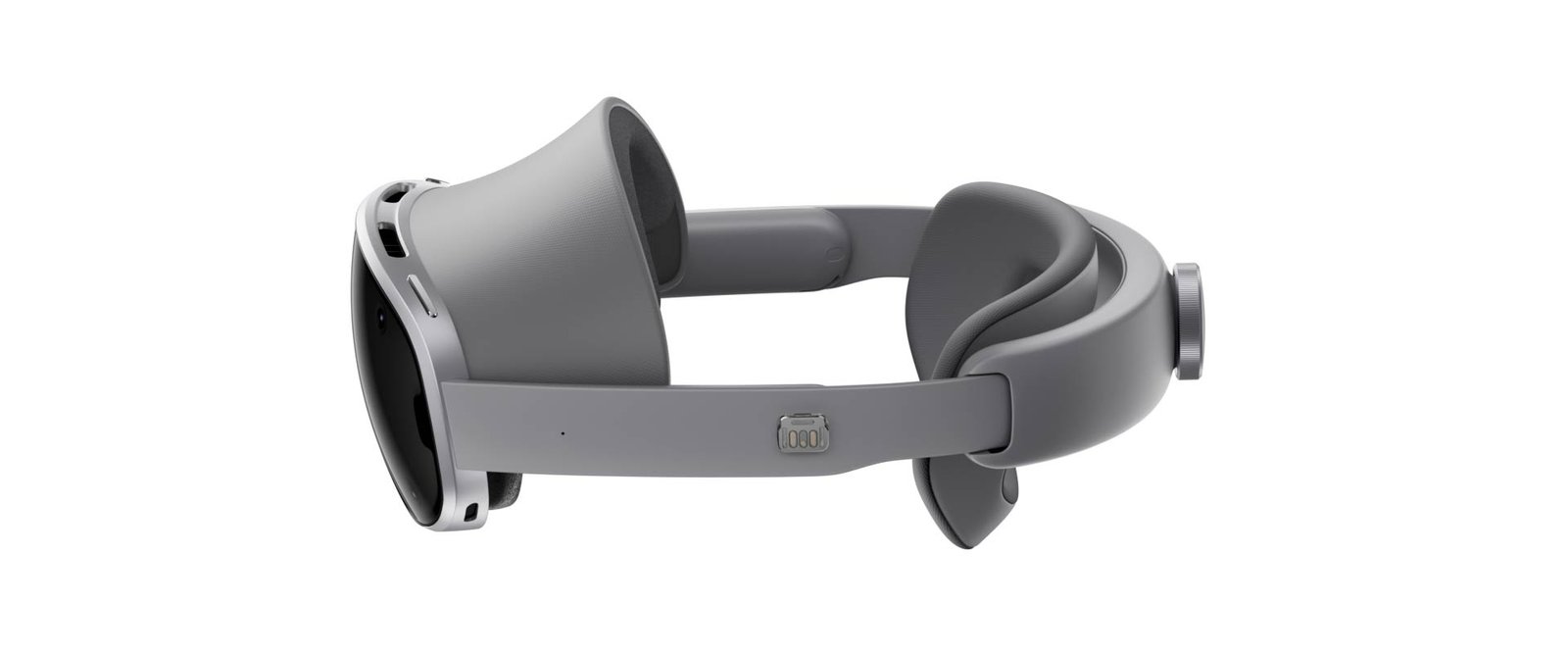
The Galaxy XR fundamentally doesn’t look that much different from the Vision Pro 🕶️. It features a large visor in front with an assortment of 13 different exterior sensors 📡 to support inside-out tracking, passthrough vision and hand recognition 🖐️. There are some additional sensors inside for eye and face tracking 👁️. There’s also a connector for the wire that leads to its external clip-on battery pack 🔋 alongside built-in speakers with spatial audio 🔊. The one big departure is that unlike the Vision Pro, the Galaxy XR doesn’t have an outward-facing display 🚫📺, so it won’t be able to project your face onto the outside of the headset, which is just fine by me 👌.
However, the devil is in the details because while the original Vision Pro weighed between 600 and 650 grams (around 1.3 to 1.4 pounds) ⚖️ depending on the configuration (not including its battery pack), the Galaxy XR is significantly lighter at 545 grams (1.2 pounds) 🪶. And that’s before you consider the new M5 Vision Pro, which has somehow gone backwards by being even heavier at 750-800 grams (around 1.6 pounds) 🏋️. Furthermore, it seems Samsung learned a lot from its rivals by including a much larger and thicker head cushion ☁️ that helps distribute the weight of the headset more evenly. Granted, during a longer session, I still noticed a bit of pressure and felt relief after taking off the Galaxy XR, but it’s nothing like the Vision Pro, which in my experience gets uncomfortable almost immediately 😣. Finally, around back, there’s a simple strap with a knob ⚙️ that you can twist to tighten or loosen the headband as necessary. So even without extra support running across the top of your head, getting in and out of the Galaxy XR is much easier and comfier than the Vision Pro 😌.
On the inside, the Galaxy XR is powered by Qualcomm’s Snapdragon XR2+ Gen 2 chip 🧠 with dual micro OLED displays that deliver 4K resolution (3,552 x 3,840) to each eye at up to 90Hz 📺✨. I wish Samsung was able to go up to a 120Hz refresh rate like on the Vision Pro, but considering the Galaxy XR’s slightly higher overall resolution, I’m not that bothered. And I must say, the image quality from this headset is seriously sharp 💎. It’s even better than Apple’s goggles and it might be the best I’ve ever used, particularly outside of $10,000+ enterprise-only setups 🏆. Once again, when you consider that this thing costs half the price of a Vision Pro, this headset feels like a real accomplishment by Samsung 🏅 to the point where I wouldn’t be surprised if the company is losing money on every unit it sells 📉💸.
#Samsung Galaxy XR
In terms of longevity, Samsung says that for general use the Galaxy XR should last around two hours ⏳. If you’re only watching videos though, that figure is more like two and a half 🎬. Thankfully, if you do need to be in mixed reality for longer, you can charge the headset while it’s being used ⚡. As for security, the Galaxy XR uses iris recognition to skip traditional passwords, which is nice 👁️🔒.
The platform: Android XR 🤖
Sometimes, trying out a new software platform can be a little jarring. But that’s not really the case for Android XR, which shouldn’t present much of a learning curve for anyone who has used other headsets or Google’s ubiquitous mobile OS 📱. After putting the goggles on, you can summon a home menu with an app launcher by facing your palm up 🖐️ and touching your index finger and thumb together 🤏. From there, you can open apps and menus by moving your hands and pinching icons or rearranging virtual windows by grabbing the anchor point along the bottom and putting them where you want 🖥️✨.




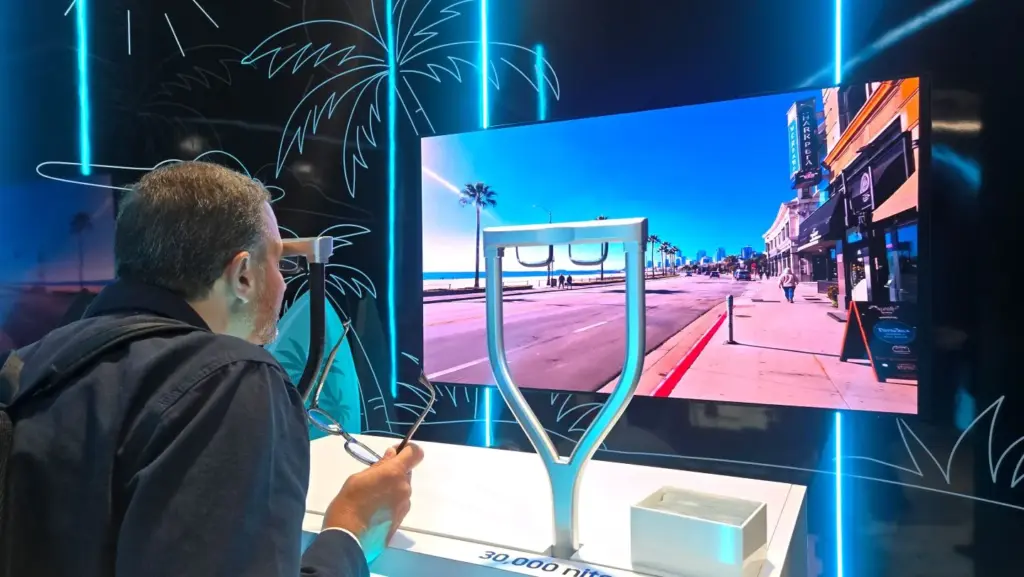
Samsung Display is pushing the boundaries of extended reality (XR) technology 🔮 with its latest breakthroughs in micro-OLED development 🧬. These advancements promise to deliver significantly brighter ✨, more immersive visual experiences for compact wearable devices, including augmented reality (AR) glasses and mixed reality (MR) headsets 🥽.
At AWE USA 2026, the company showcased 🏆 a 1.3-inch RGB OLEDoS (OLED on Silicon) microdisplay panel capable of reaching an astonishing 40,000 nits of brightness ☀️. To demonstrate this capability, Samsung created a darkroom exhibit titled “The Big Dipper,” 🌌 which used seven displays to recreate the famous constellation ✨. While only two of the screens featured the new ultra-bright panel, the contrast was stark, with the new technology delivering vastly superior brightness and more vibrant, lifelike colors 🎨 compared to the standard displays.
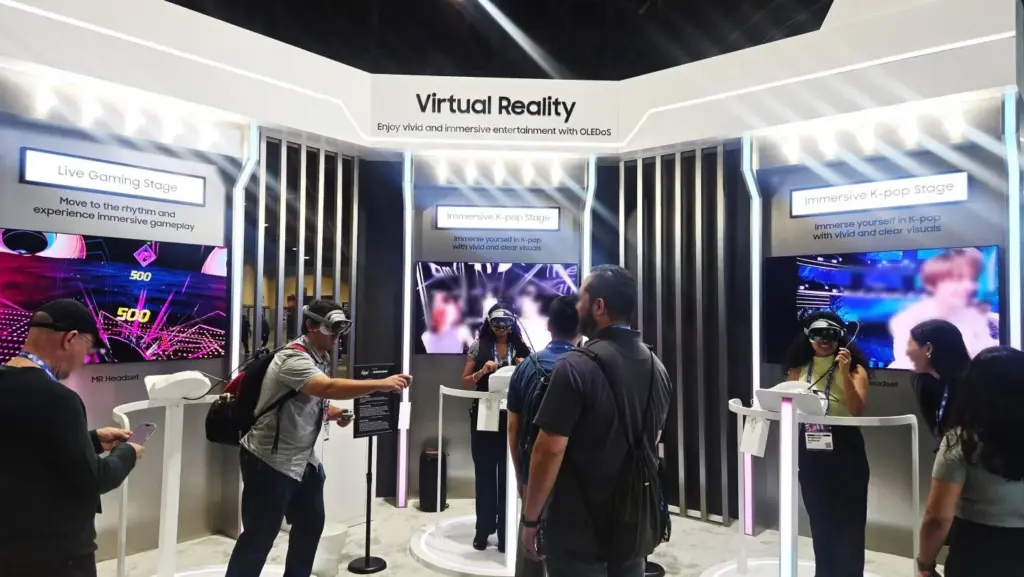
This RGB OLEDoS technology achieves its performance by utilizing direct-emission pixels 🎯, bypassing the need for traditional color filters. This design significantly improves light efficiency 💡, which translates to better energy conservation 🔋 and a longer lifespan for the panel. For XR hardware, high brightness is a critical requirement; displays must remain crisp and legible even when competing with intense ambient light—such as direct sunlight ☀️ or bright indoor environments—all without rapidly draining the device’s battery ⚡.
Alongside the flagship display, Samsung demoed several other prototypes 🕹️, including lightweight AR glasses 👓 featuring a smaller 0.62-inch, 30,000-nit version of the panel, and an MR headset leveraging the same technology. The company also showcased stretchable displays 🌀 and naked-eye 3D light field displays 🔮, underscoring its broad commitment to pioneering next-generation visual technologies 🚀.
These breakthroughs arrive as the XR market gains significant commercial momentum 🚀. Consumer electronics manufacturers are increasingly seeking components that enable lighter, more ergonomic, and visually stunning 💎 smart glasses and headsets. High-brightness microdisplays of this caliber are widely considered the missing link 🧩 for seamless mixed reality, allowing digital overlays to blend naturally and convincingly with the physical world 🌍.
Ultimately, Samsung Display’s showcases at AWE USA 2026 represent a major stride toward practical, high-performance XR hardware suited for daily wear. As competition in the spatial computing sector 🪐 intensifies, innovations like these are poised to accelerate the mainstream adoption 📈 of advanced AR and MR devices.
Develop a premium, high-converting, single-sentence Call to Action designed with a compelling audience motivator, using this title and overview: TITLE: Orbio raises $21 million to automate hiring and onboarding for frontline workers. CONTENT:
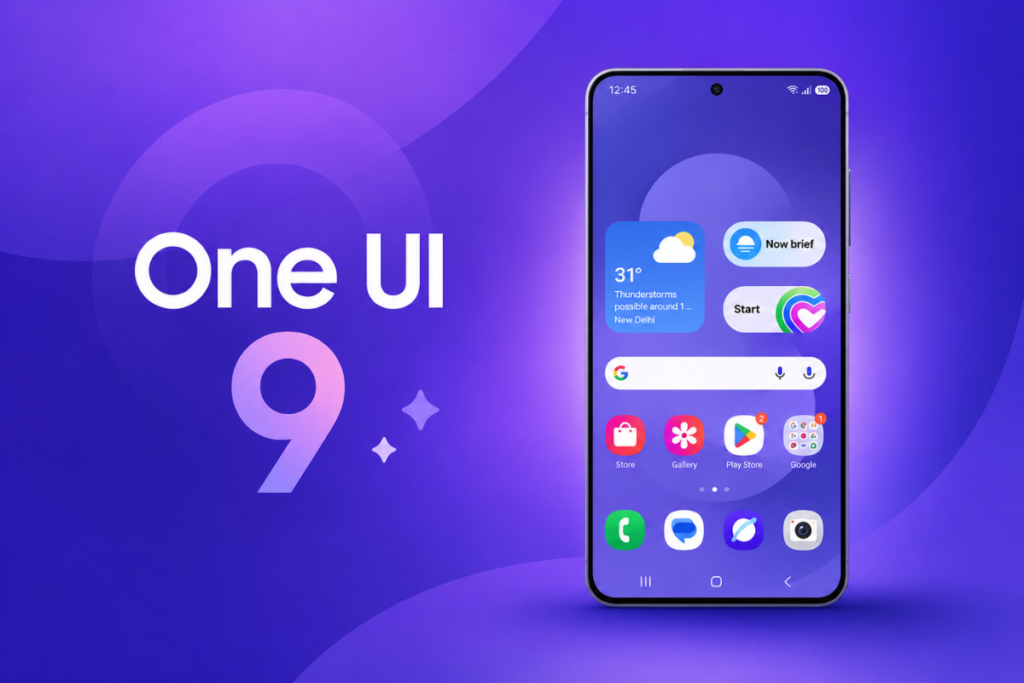
Although the One UI 9 beta program is currently exclusive to the Galaxy S26 series, Samsung is already hard at work testing the Android 17-based build across a broader range of hardware, including several mid-range models. 🛠️ This internal testing suggests that the company may be preparing to open the beta program to a wider audience of Galaxy users very soon. 🚀
We have spotted the following Galaxy devices running internal One UI 9.0 test firmware on Samsung’s servers: 🔍
📱 Galaxy S25
📱 Galaxy S25+
📱 Galaxy S25 Ultra
📱 Galaxy A57
📱 Galaxy A34
📱 Galaxy A17 5G
📱 Galaxy Z Fold 8 (unreleased)
📱 Galaxy Z Flip 8 (unreleased)
📱 Galaxy Z Fold 8 Ultra (unreleased)
📱 Galaxy Z Fold 7
While these sightings don’t confirm an immediate release date for these specific models, they strongly indicate that Samsung is actively preparing to expand the beta program. 📈 We will be sure to keep you updated as soon as more devices are added to the list. 🔔
Currently, the One UI 9 beta is limited to the Galaxy S26, S26+, and S26 Ultra. 🔒 Samsung has yet to make an official announcement regarding an expansion, but based on previous release cycles, it is highly likely that more devices will be invited to join the testing phase in the coming weeks. 📅
The stable version of One UI 9, powered by Android 17, is expected to launch alongside the next generation of foldables: the Galaxy Z Fold 8, Galaxy Z Flip 8, and the new Galaxy Z Fold 8 Ultra. 🏗️ Current rumors point to an official unveiling of these devices on July 22. 🗓️
Stay ahead of the curve with the latest One UI updates. ⚡ Be sure to check our Samsung news section frequently or join us on Telegram to receive instant notifications the moment new stories are published. 📢
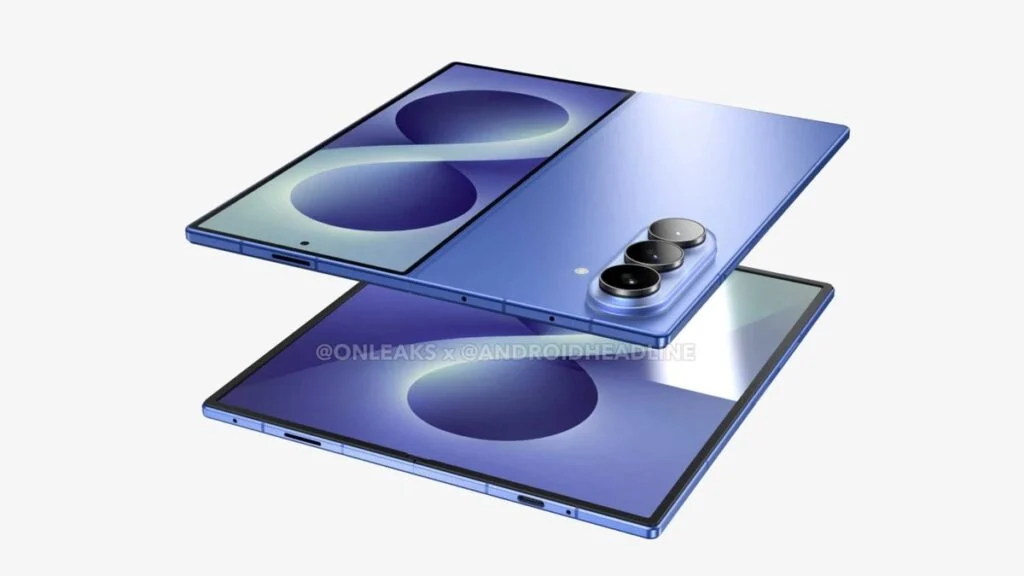
Samsung is finally killing the most confusing part of the Galaxy Z Fold 8. 🚫 Forget the “Wide” rumors—the “Ultra” era is officially here. 📱✨
Samsung appears to be rethinking the naming convention for its upcoming foldables 📱, opting for simplicity over clutter ✨. According to a recent leak from reliable tipster Ice Universe 🧊, the tech giant is abandoning the convoluted “Wide” and “Large” monikers 🚫 that had dominated recent rumors surrounding the Galaxy Z Fold 8 lineup.
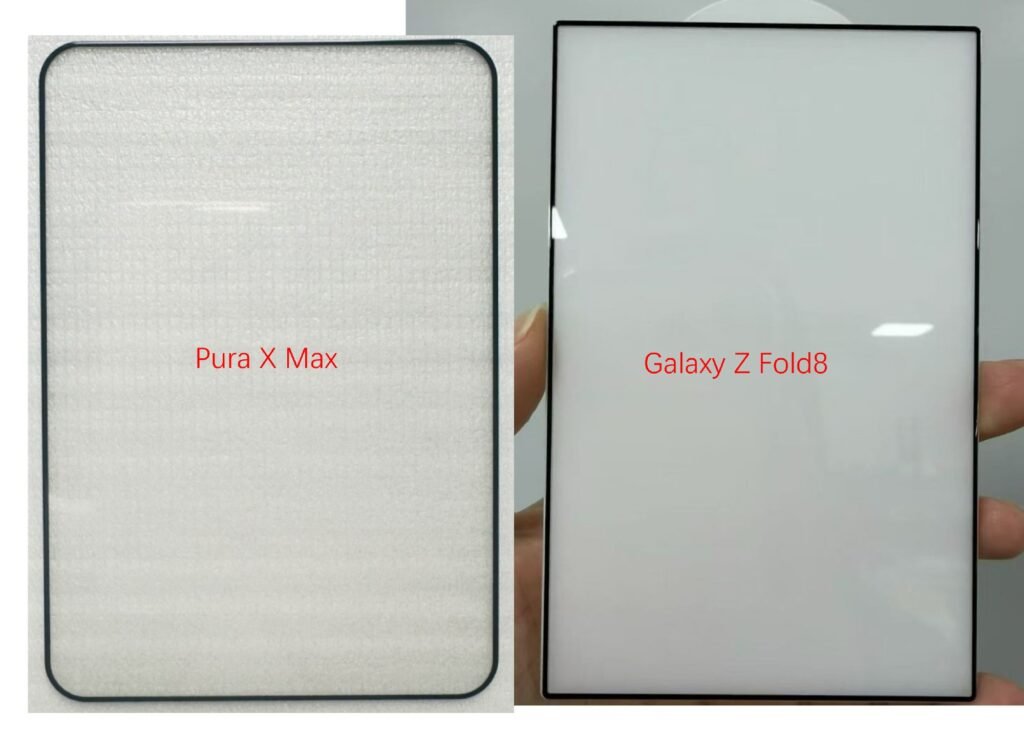
Rather than introducing the unwieldy Galaxy Z Fold 8 Wide, Samsung will reportedly launch the device simply as the Galaxy Z Fold 8 🆕. Meanwhile, the premium tier of the lineup is expected to make its debut as the Galaxy Z Fold 8 Ultra 👑.
If this leak holds true, it represents a welcome pivot toward a much cleaner, more digestible product lineup 🧼. Over the past few months, clunky names like “Z Fold 8 Wide” and “Galaxy Z Wide Fold” have circulated across the rumor mill 🗣️, drawing criticism from consumers who found the branding awkward and needlessly complex 📉.
Galaxy Z Fold 8 Ultra 💎
Positioned as the top-tier offering, the rumored Ultra model is slated to deliver several notable hardware advantages over the standard Fold 8 🚀. Current reports indicate it will pack a robust 5000mAh battery 🔋 and a sophisticated triple-camera array 📸, complete with a dedicated telephoto lens 🔭. In contrast, the standard Fold 8 will likely feature a slightly smaller 4800mAh battery and a more modest dual-camera system 📷.
Under the hood, both devices are expected to be powered by Qualcomm’s formidable Snapdragon 8 Elite Gen 5 chipset 🏎️⚡. Buyers can also look forward to refined foldable displays across the board 👐, though the standard model may sport a more compact aspect ratio compared to its Ultra counterpart 📏.
Industry watchers anticipate that Samsung will officially unveil these next-generation foldables at its traditional summer Galaxy Unpacked event in July 2026 🗓️☀️. While recent speculation suggests London could play host to the launch 🇬🇧, Samsung has yet to officially confirm the venue or the exact date 📍.
Streamlining the product names is a highly strategic move 🎯, particularly as the foldable market grows increasingly competitive 🏁. Over the past year, Chinese manufacturers have aggressively elevated their own foldable offerings 🇨🇳, all while the specter of Apple’s long-rumored entry into the space continues to loom large 🍎👀.

JBL Live 780NC and Live 680NC Debut 🎉 in India: Featuring True Adaptive ANC, Spatial Audio, and Up to 80 Hours of Battery Life 🔋

Vivo X Fold 6 Set to Redefine Foldables with a 7,000mAh Battery 🔋 and IPX8/IPX9 Durability 🛡️

Why Next-Gen AI Smartphones May Ditch LPDDR for LLW 🪐

The final 6 ‘Game of Thrones’ Trailer

Oppo Android 17 (ColorOS 17) update: Full list of eligible devices 📱📲

The old and New Edition cast comes together to perform

Vivo X Fold 6 with Dimensity 9500 ⚙️, 200MP triple cameras to launch by June end 🚀

Marvel Tōkon: Fighting Souls 🥊 arrives on PS5 and PC 🎮 this August 6, bringing the X-Men ❌ along for the ride.

Samsung Galaxy Unpacked 2026 📅: The Galaxy S26 series ✨,
-
 Entertainment9 years ago
The final 6 ‘Game of Thrones’ Trailer
-
 Smartphones5 months ago
Oppo Android 17 (ColorOS 17) update: Full list of eligible devices 📱📲
-
 Entertainment9 years ago
The old and New Edition cast comes together to perform
-

 Buying9 years ago
Phillies’ Aaron Altherr makes mind-boggling barehanded play
-

 Videos9 years ago
Uber and Lyft are finally available in all of New York State
-

 Entertainment9 years ago
Disney’s live-action Aladdin finally finds its stars
-

 Buying9 years ago
Steph Curry finally got the contract he deserves from the Warriors
-

 Smartphones9 months ago
OnePlus 16 May Borrow Massive 9,000mAh Battery From Turbo 6 Series 🔋⚡