
Tech
The Software That Makes the ZimaBoard 2 a Standout Home Server ZimaOS 1.5 🏠🚀

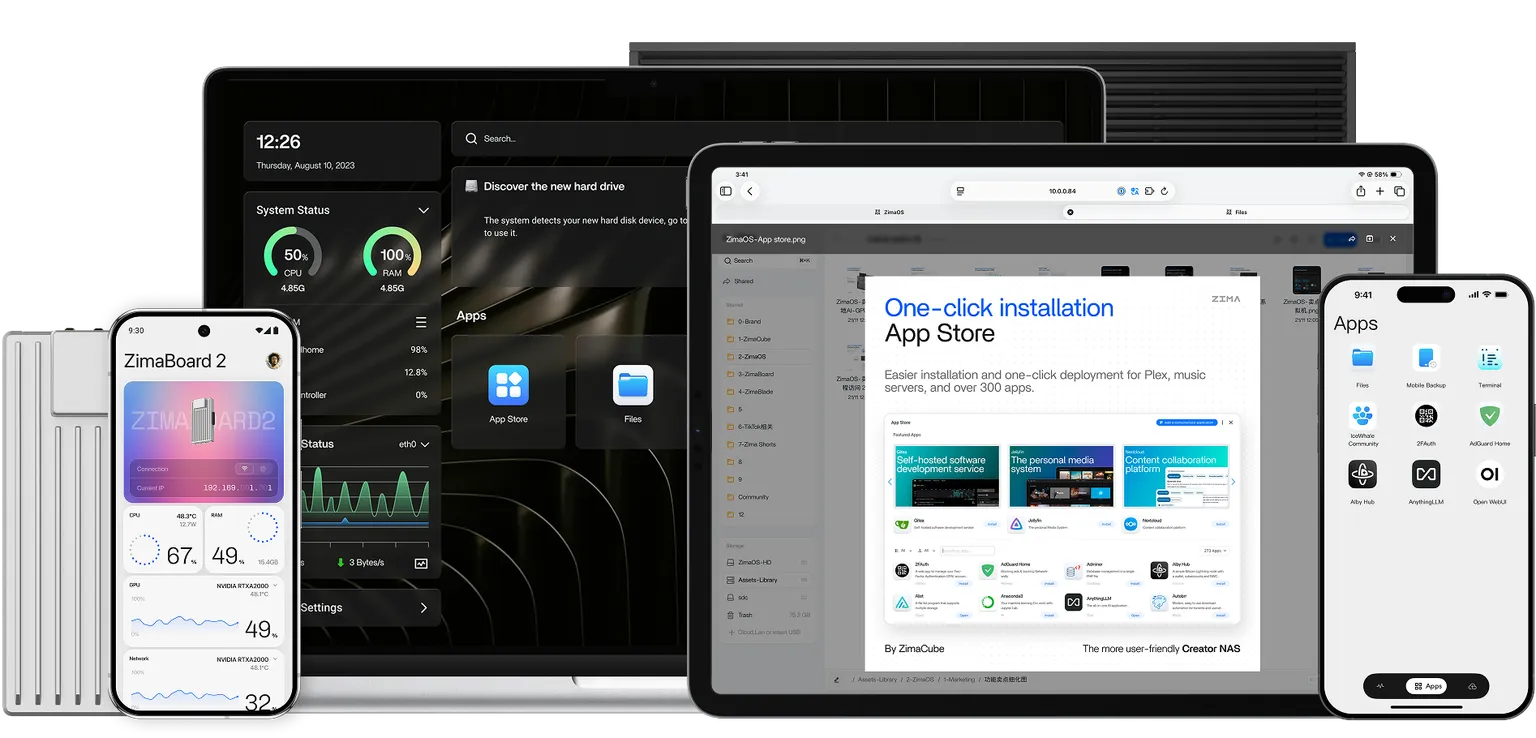
The ZimaBoard 2 has already made a lasting impression on us as a highly capable single-board server. ⌨️ You need only look at our team’s previous articles to see the depth of our appreciation. Today, however, we are shifting our focus to an element we haven’t fully explored yet: the latest iteration of ZimaOS—a streamlined, focused, and open NAS operating system. 🌐📦

With the Zima team recently updating the system to version 1.5, now is the perfect time to take an inside-out look at why the ZimaBoard 2 has garnered such popularity. ✨📈
Hardware ⚙️
To truly appreciate the appeal of the ZimaBoard 2, it is worth briefly revisiting the hardware foundation. Most of the connectivity remains consistent with the first-generation ZimaBoard, featuring two 2.5GbE LAN ports, two SATA 3.0 ports, two USB 3.1 ports, and a Mini DisplayPort 1.2. 🔌⚡
The most significant evolution lies in the PCIe interface, which has graduated from PCIe 2.0 to PCIe 3.0. 🏎️💨 While the lane count remains the same, PCIe 3.0 delivers nearly double the bandwidth and vastly improved transmission efficiency. This upgrade is crucial for maximizing the performance of expansion devices, particularly NVMe SSDs and high-speed network cards. 💾
As a single-board server, the ZimaBoard 2 is robust on the hardware front. Yet, it is the integration of ZimaOS 1.5 that truly elevates the user experience. 🌟💪
How ZimaOS Lowers the Barrier to Entry 🔓
Despite the undeniably “geeky” aesthetic of Zima’s hardware, ZimaOS was engineered with a democratizing goal: to enable every household to own a private cloud. ☁️🤓 Consequently, the learning curve is refreshingly gentle.
Setup is straightforward: simply plug in the power, connect an Ethernet cable to your router, and download the client from the official website to your laptop or phone. 📶 Following the prompts to create an account takes less than five minutes. It is an almost effortless process, even for users with zero server management experience. 🖱️⏳ Naturally, the client isn’t mandatory; if you prefer, you can access the Web UI directly via the device’s IP address.

Crucially, account registration is entirely local. It requires no email address or phone number, ensuring that your data remains strictly yours and is never uploaded to external servers. 🔒🛡️
Backup 📂
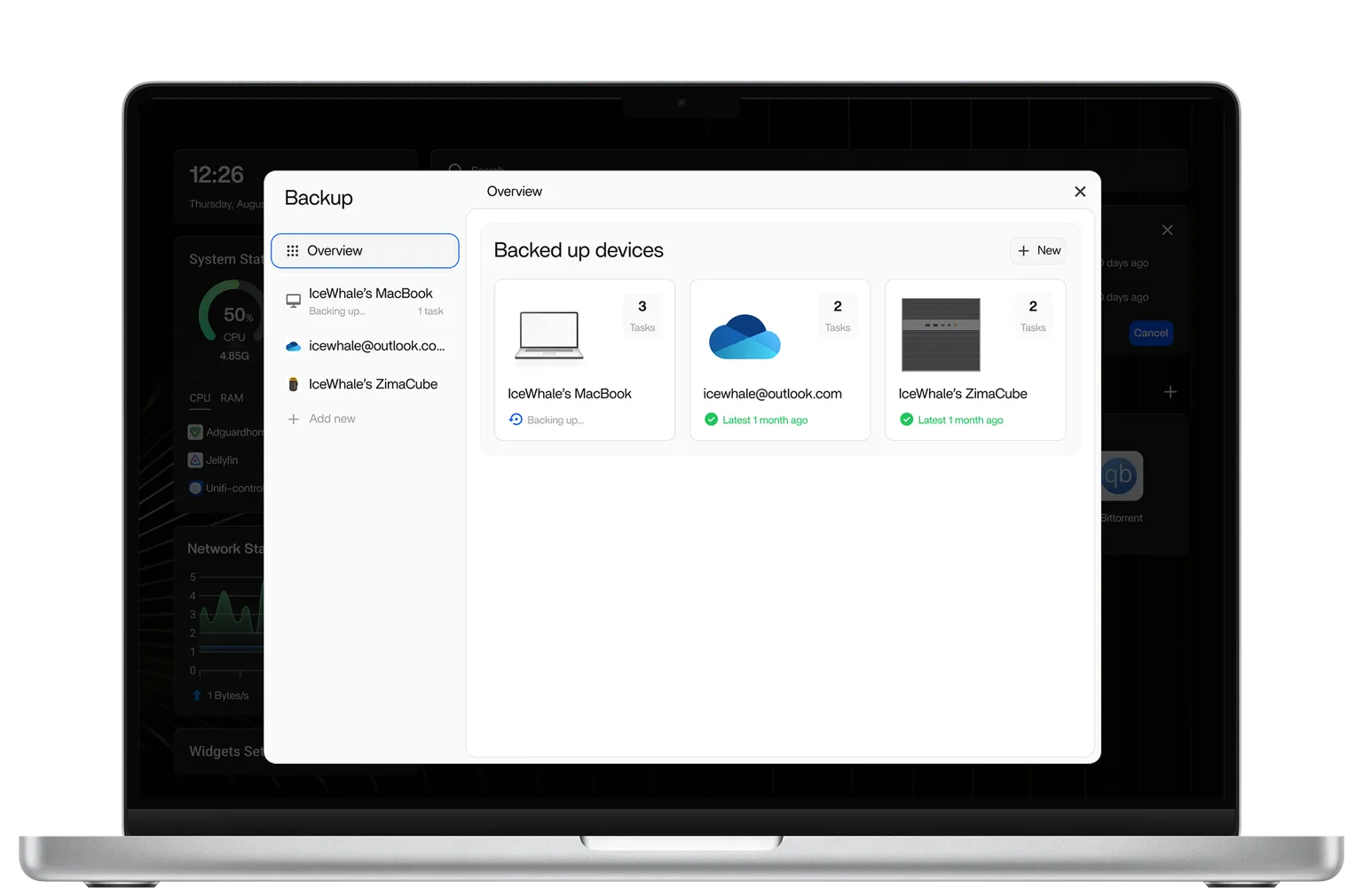
So, what is the practical utility of ZimaOS? At its core, it functions as a NAS operating system, handling all the essentials you would expect from mainstream solutions. Data backup is the primary function, allowing photos, videos, and documents to be securely stored on the ZimaBoard 2. 📸🎥📄
While the built-in 64GB of internal storage is a starting point, it may not suffice for everyone—though we will address storage expansion in a moment. 📦➕
The greatest enemy of consistent backups is inconvenience. ⚔️ To eliminate friction, ZimaOS provides multiple methods for file management. It supports direct mounting of cloud drives and instant mounting of USB drives upon connection, as well as seamless local and remote access via smartphones, PCs, and Macs. For most users, their most valuable data resides on their mobile devices. With ZimaOS, backing up a phone takes roughly ten seconds—fast, painless, and efficient. 📱⚡
More Freedom 🕊️
ZimaOS offers more than just digital storage; its app store opens up a playground of possibilities. 🏪 You can, for instance, deploy RetroArch to transform your ZimaBoard into a retro gaming emulator, or install MineOS to host your own private Minecraft server. 🕹️⛏️
For power users who demand more from their NAS, Docker support is indispensable. 🐋 ZimaOS accommodates this need seamlessly, allowing you to import and launch custom Docker applications via the CLI or by using Docker Compose files. 💻
A Fully-Featured NAS 🏢🗄️
If the internal 64GB storage feels limiting, the ZimaBoard 2 can easily transform into a fully-fledged NAS with the addition of spare hard drives. Icewhale has even engineered a dedicated 2-Bay HDD Rack Tray specifically for the ZimaBoard 2. 🏗️💿
This metal rack tray does more than just secure the board and aid in heat dissipation; it allows for the installation of various expansion boards on the side using a PCIe extension cable. ❄️ The result is a setup that functions as a server but doubles as a stylish desktop accessory. ✨📐
However, the rack tray is not a requirement. You can simply connect HDDs directly to the ZimaBoard 2 for a quick setup. While ZimaOS supports RAID 5, the two-drive configuration makes RAID 1 the most practical choice for data redundancy. 👯🛡️
Alternatively, you can leverage the PCIe slot to add five additional SATA ports, effectively turning a two-bay NAS into a seven-bay powerhouse. Pair that capacity with Jellyfin, and you have successfully built a comprehensive home media library. 🍿🎬
Summary 📝
Taking a step back, the rising popularity of the ZimaBoard 2 and ZimaOS is easy to understand. For the average home user, traditional NAS solutions often present a steep barrier to entry, plagued by complex setups, confusing network configurations, and intricate permission management. 🧩 Conversely, for enthusiasts, building a Linux server from scratch offers flexibility but comes with the burden of ongoing maintenance, updates, and troubleshooting. 🛠️
ZimaOS occupies the sweet spot between these extremes. 🎯 It avoids being a limited “toy” solution while skipping the intimidating complexity of enterprise-grade systems. By remaining simple yet preserving extensibility and freedom, ZimaOS offers a value proposition that is arguably rare in today’s market. ⚖️
Whether you are a complete novice or a seasoned enthusiast, ZimaOS has something to offer. 🎓 With the addition of Icewhale’s 2-Bay HDD Rack Tray, the system even boasts an attractive physical form. If you are the type of user who appreciates DIY desktop PCs in ITX cases, you will likely find a lot to love in the ecosystem the Zima team has created. 🖼️🛠️
Continue Reading
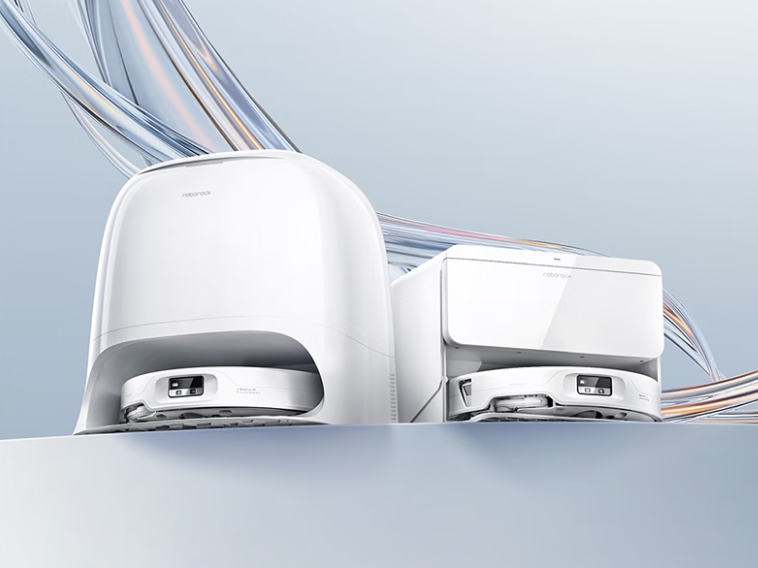
Roborock has officially taken the wraps off its newest flagship in the self-cleaning market: the P20 Max. 🚀 Hitting shelves today, this high-end robot vacuum and mop combo starts at 4,299 yuan (approximately $622) for the standard water-tank model. 💰 For those seeking a truly hands-off experience, the version equipped with automatic water supply and drainage is priced at 4,699 yuan (around $680). 💧🏠
Roborock P20 Max ✨
Roborock P20 Max Specifications 📋
In terms of physical footprint, the P20 Max is impressively compact. 📏 It measures 352mm by 350mm, but the standout figure is its height; at just 79.8mm, it boasts a low-profile build specifically engineered to glide under furniture and navigate tight corners. 🛋️ Under the hood, it pairs a precision navigation system with a robust 6,400mAh lithium battery, ensuring it has the stamina to cover larger homes in a single session. 🔋🏠
When it comes to cleaning performance, the P20 Max delivers a massive 35,000Pa of suction via a high-speed motor and optimized airflow architecture. 💨🌀 To tackle the perennial problem of hair wrapping, Roborock has integrated dual main brushes alongside curved side brushes designed to resist tangles. ✂️💆♀️ Furthermore, the device employs a carpet pressure cleaning system that drives bristles deep into fibers, effectively extracting embedded dirt from soft surfaces. 🧶✨
Roborock P20 Max 🤖

#Roborock P20 Max
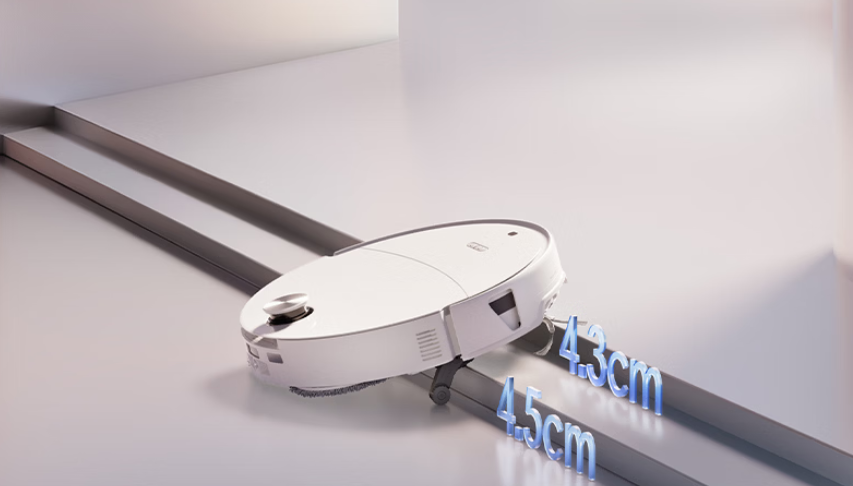
One of the most innovative features is the inclusion of Roborock’s Lift Chassis 3.0. 🦾 This AI-driven wheel-leg structure allows the robot to traverse obstacles up to 8.8cm in height. 🧗♂️ To ensure stability on uneven terrain, the system utilizes shock-absorbing landing control and coordinated wheel movement. For particularly low-clearance areas, such as under beds or sofas, the robot can engage a low-height navigation mode to further reduce its profile. 🛏️📉
On the mopping front, the P20 Max utilizes dual rotating pads that scrub with 60°C heated water and 12N of downward pressure to eliminate sticky, stubborn stains. 🧼🔥 The accompanying docking station is equally capable, supporting 100°C high-temperature mop washing, hot-air drying, and automatic dust collection. 🌬️🗑️ Users who opt for the automatic water version also gain the benefit of auto-refilling and drainage for a completely hands-free maintenance cycle. 🚿✨
Roborock P20 Max 🌟
#Roborock P20 Max
Navigation is bolstered by AI-powered obstacle recognition using Edge Structured Light 2.0, which can identify more than 280 different types of objects. 👁️🤖 This advanced system allows for precise edge cleaning and optimized route planning. Connectivity options are robust as well, with support for voice commands, app control, and seamless integration with smart home ecosystems like Apple Home and Xiaomi. 🗣️📱🏠
This launch follows Roborock’s earlier release of the G30S Pro, another powerhouse model that debuted with similar specifications, including 35,000Pa suction, the Chassis Lift 3.0 system, sonic mopping, and AI-driven navigation. 💪🦾✨

Recent leaks suggest that Vivo is poised to join the growing trend of mega-battery smartphones with a powerful new device. ⚡🚀
According to the noted tipster Digital Chat Station on Weibo, Vivo is currently putting a new phone through its paces—one that boasts a rated 10,000mAh battery. 🕵️♂️💬

#Leak
The hardware reportedly utilizes a 4.53V single-cell silicon battery with a rated capacity of 10,000mAh. However, the typical value is expected to be even higher, ranging between 11,000mAh and 12,000mAh, subject to standard margins of error. 🔋📈
The industry push toward 10,000mAh 🔝
Smartphone battery capacities have been on a consistent upward trajectory recently, a trend driven largely by Chinese manufacturers. 📈🇨🇳
While 5,000mAh has become the baseline standard, devices packing 7,000mAh to 8,000mAh cells are becoming increasingly frequent in the Chinese market. Notably, competitors like Honor and Realme have already introduced handsets featuring 10,000mAh batteries. 🔋📱
Wider market implications 🌎
The leak has naturally sparked discussion regarding the competition. When pressed about Xiaomi’s strategy for large-capacity devices, the tipster indicated that such phones are currently in the planning phase and will come equipped with “all the necessary features.” This suggests Xiaomi is eyeing the sector, though concrete details remain unfinalized. 🧐💡
In a separate interaction, the leaker clarified expectations for Vivo’s flagship lineup. Digital Chat Station suggests that while the main flagship series is unlikely to reach the 9,000mAh mark this year, sub-brand iQOO could very well feature a 9,000mAh cell in its upcoming roster. 🏎️⚡
For the moment, this information remains a leak. As noted, the Vivo handset with the purported 11,000mAh to 12,000mAh typical capacity is still undergoing testing. Even if these trials prove successful, a commercial launch could still be some time away. We will continue to monitor the situation. ⏳🧪👀
Stay ahead in tech! Join our Telegram community and sign up for our daily newsletter of top stories! 📲📧🔔
Xiaomi Electric Scooter 6 Ultra poised for global debut: 75km range and 1200W peak power 🛴🌍🔋⚡
Ahead of its scheduled February 28 showcase in Barcelona 🇪🇸, Xiaomi has officially teased the Electric Scooter 6 Ultra. The flagship model has surfaced on the company’s global portal under the “Xiaomi Launch February 2026” banner, confirming that a full unveiling is imminent. 🚀📅
#Xiaomi
Designed to crown the current lineup 👑, the Ultra sits above the standard 6, 6 Lite, 6 Pro, and 6 Max. Although Xiaomi hasn’t released the definitive spec sheet just yet, early retailer listings provide a comprehensive preview of what the new top-tier model brings to the table. 🔍📝
More power, longer range 💪🔋
If the listings hold true, the Scooter 6 Ultra is powered by a 500W motor capable of ramping up to a peak output of 1,200W. ⚡ This upgrade promises significantly sharper acceleration than the 6 Max, alongside much-improved hill-climbing capabilities. ⛰️💨
While the top speed remains limited to 25 km/h in most markets to satisfy regulatory requirements 🛑, the torque figures tell a different story. With approximately 45 Nm on tap, the scooter is engineered to feel considerably punchier when pulling away from a standstill. 🚀
Endurance comes from a reported 585Wh battery 🔋, which Xiaomi claims can cover up to 75 km on a single charge under optimal conditions. While real-world mileage will inevitably fluctuate based on terrain, speed, and rider weight, this spec cements the Ultra as the long-distance leader of the series. 🛣️🏁
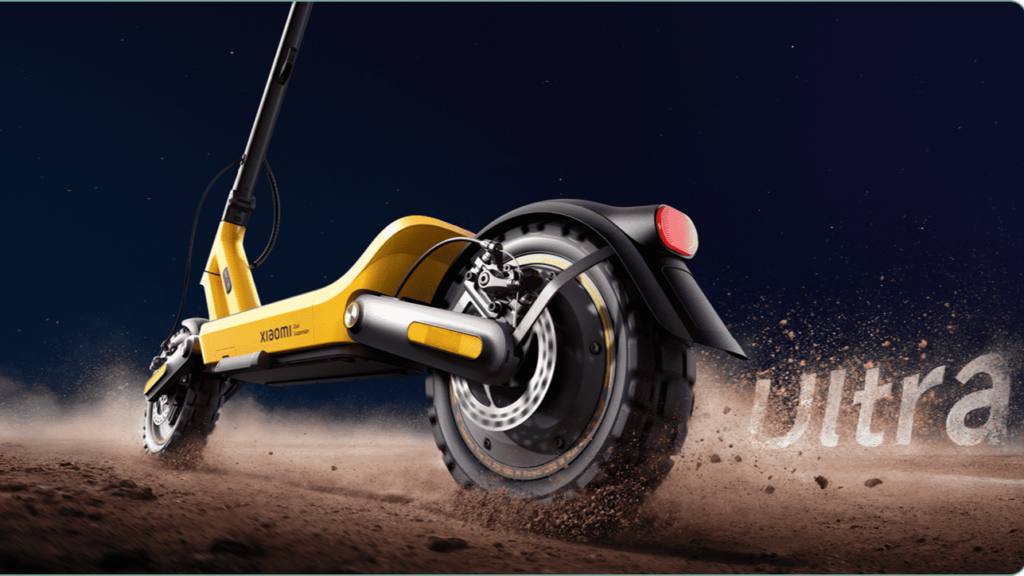
Beyond raw power, the Ultra appears focused on rugged utility. 🛠️ The hardware list includes a full suspension setup (front and rear), 12-inch tubeless all-terrain tires 🚲, and dual disc brakes working in tandem with an E-ABS system for superior stopping power. 🛑
Practicality features include an IPX6 water resistance rating 💧, ensuring the device can shrug off light rain. 🌧️ Riders can also track their stats, including speed and battery life, via a vivid 3-inch TFT dashboard. 🖥️📊
However, this performance comes at the cost of portability. ⚖️ Weighing in at approximately 33.7 kg, the Ultra is undeniably a heavy-duty machine. 🏋️ It is designed for serious urban commuting 🏙️ rather than being a lightweight “last-mile” solution you can easily haul up a flight of stairs. 🪜
Pricing and launch timing 💰📅
Preliminary reports point to a launch price of around €799.99 💶, positioning the Ultra firmly at the premium end of Xiaomi’s portfolio. 💎 While this represents a significant jump from the brand’s budget-friendly options, the Ultra is clearly aiming for riders who demand maximum range and robust performance. 🛴✨

Tech2 weeks ago
Roborock unveils the P20 Max: A vacuum powerhouse with 35,000Pa suction & AI smarts 🤖🌪️🧠

Smartphones2 weeks ago
Vivo reportedly testing a massive single-cell 12,000mAh smartphone 📱🔋

Tech2 weeks ago
Xiaomi Electric Scooter 6 Ultra poised for global debut: 75km range and 1200W peak power 🛴🌍🔋⚡

Entertainment9 years ago
The final 6 ‘Game of Thrones’ Trailer

Entertainment9 years ago
The old and New Edition cast comes together to perform

Buying9 years ago
Phillies’ Aaron Altherr makes mind-boggling barehanded play

Videos2 weeks ago
Marvel Tōkon: Fighting Souls 🥊 arrives on PS5 and PC 🎮 this August 6, bringing the X-Men ❌ along for the ride.

Entertainment2 weeks ago
Samsung Galaxy Unpacked 2026 📅: The Galaxy S26 series ✨,

Videos2 weeks ago
Bradley the Badger channels Wreck-It Ralph in a meta video game adventure 🦡🕹️
-
 Entertainment9 years ago
The final 6 ‘Game of Thrones’ Trailer
-
 Entertainment9 years ago
The old and New Edition cast comes together to perform
-
 Buying9 years ago
Phillies’ Aaron Altherr makes mind-boggling barehanded play
-

 Videos9 years ago
Uber and Lyft are finally available in all of New York State
-

 Entertainment9 years ago
Disney’s live-action Aladdin finally finds its stars
-

 Buying9 years ago
Steph Curry finally got the contract he deserves from the Warriors
-

 Entertainment9 years ago
From ‘Dick Clark’s New Year’s Rockin’ Eve’ 🎸 to ‘Nashville’s Big Bash,’ 🤠
-
Buying9 years ago
Boxing continues to knock itself out with bewildering, incorrect decisions